
IMAGES TAKEN NEAR TO
Lillie Square, LONDON, SW6 1GD
Introduction
This page details the photographs taken nearby to Lillie Square, SW6 1GD by members of the Geograph project.
The Geograph project started in 2005 with the aim of publishing, organising and preserving representative images for every square kilometre of Great Britain, Ireland and the Isle of Man.

There are currently over 7.5m images from over14,400 individuals and you can help contribute to the project by visiting https://www.geograph.org.uk
Image Map
Images are licensed for reuse under creativecommons.org/licenses/by-sa/2.0
Notes
- Clicking on the map will re-center to the selected point.
- The higher the marker number, the further away the image location is from the centre of the postcode.
Image Listing (383 Images Found)
Images are licensed for reuse under creativecommons.org/licenses/by-sa/2.0
Image
Details
Distance
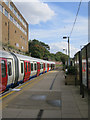
2
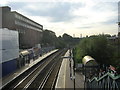
West Brompton station: the Overground lines, looking south
Image: © Christopher Hilton
Taken: 16 Sep 2011
0.05 miles
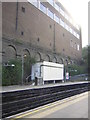
4
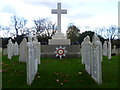
The Brigade of Guards Memorial, Brompton Cemetery
A section of Brompton Cemetery is enclosed by railings and includes The Brigade of Guards Memorial, seen here with the cross, which dates from 1889. The memorial marks the burial place of many hundred peacetime casualties of the Brigade of Guards. The marble headstones date from 1889 onwards and list names grouped by regiments. There are also individual gravestones within the enclosure.
Brompton Cemetery is one of 'The Magnificent Seven' cemeteries and is the closest of the major cemeteries to the centre of London. Opened in 1836 on land owned by Lord Kensington, its original layout was based on the plan of a vast cathedral, with a chapel in the middle based on St Peter's Basilica in Rome. It was extended in 1844 to make the plot a full rectangle. In 1850 the government agreed to purchase all the London cemeteries, which was fortunate for Brompton as the original plan had been ruinously expensive. That edict was repealed two years later, except in the case of Brompton which by this quirk remains the only public cemetery to stay under government control and is now managed by The Royal Parks.
Image: © Marathon
Taken: 30 Nov 2011
0.06 miles
5
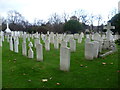
The Brigade of Guards Plot, Brompton Cemetery
A section of Brompton Cemetery is enclosed by railings and includes The Brigade of Guards Memorial, seen here on the left with the cross, which dates from 1889. The memorial marks the burial place of many hundred peacetime casualties of the Brigade of Guards. Marble headstones date from 1889 onwards and list names grouped by regiments. There are also individual gravestones within the enclosure.
Brompton Cemetery is one of 'The Magnificent Seven' cemeteries and is the closest of the major cemeteries to the centre of London. Opened in 1836 on land owned by Lord Kensington, its original layout was based on the plan of a vast cathedral, with a chapel in the middle based on St Peter's Basilica in Rome. It was extended in 1844 to make the plot a full rectangle. In 1850 the government agreed to purchase all the London cemeteries, which was fortunate for Brompton as the original plan had been ruinously expensive. That edict was repealed two years later, except in the case of Brompton which by this quirk remains the only public cemetery to stay under government control and is now managed by The Royal Parks.
Image: © Marathon
Taken: 30 Nov 2011
0.06 miles
6
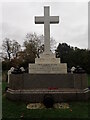
The Brigade of Guards Memorial, Brompton Cemetery
A section of Brompton Cemetery is enclosed by railings and includes The Brigade of Guards Memorial, seen here with the cross, which dates from 1889. The memorial marks the burial place of many hundred peacetime casualties of the Brigade of Guards. The marble headstones date from 1889 onwards and list names grouped by regiments. There are also individual gravestones within the enclosure.
Brompton Cemetery is one of 'The Magnificent Seven' cemeteries and is the closest of the major cemeteries to the centre of London. Opened in 1836 on land owned by Lord Kensington, its original layout was based on the plan of a vast cathedral, with a chapel in the middle based on St Peter's Basilica in Rome. It was extended in 1844 to make the plot a full rectangle. In 1850 the government agreed to purchase all the London cemeteries, which was fortunate for Brompton as the original plan had been ruinously expensive. That edict was repealed two years later, except in the case of Brompton which by this quirk remains the only public cemetery to stay under government control and is now managed by The Royal Parks.
Image: © Marathon
Taken: 29 Oct 2020
0.06 miles
7
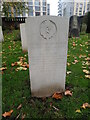
Grave of Charles Ellingworth, Brompton Cemetery
Brompton Cemetery is one of 'The Magnificent Seven' cemeteries and is the closest of the major cemeteries to the centre of London. Opened in 1836 on land owned by Lord Kensington, its original layout was based on the plan of a vast cathedral, with a chapel in the middle based on St Peter's Basilica in Rome. It was extended in 1844 to make the plot a full rectangle. In 1850 the government agreed to purchase all the London cemeteries, which was fortunate for Brompton as the original plan had been ruinously expensive. That edict was repealed two years later, except in the case of Brompton which by this quirk remains the only public cemetery to stay under government control and is now managed by The Royal Parks.
Among many other campaigns, Charles Ellingworth saw action in the Crimea, including the glorious 'Thin Red Line' of Balaklava, of which he was known to be the last survivor. This gives more detail about the life of Charles Ellingworth http://www.theargylls.co.uk/battlebalaklava.php
Image: © Marathon
Taken: 29 Oct 2020
0.06 miles
9
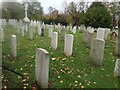
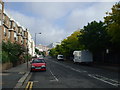
The Brigade of Guards Plot, Brompton Cemetery
A section of Brompton Cemetery is enclosed by railings and includes The Brigade of Guards Memorial, seen here on the left with the cross, which dates from 1889. The memorial marks the burial place of many hundred peacetime casualties of the Brigade of Guards. Marble headstones date from 1889 onwards and list names grouped by regiments. There are also individual gravestones within the enclosure.
Brompton Cemetery is one of 'The Magnificent Seven' cemeteries and is the closest of the major cemeteries to the centre of London. Opened in 1836 on land owned by Lord Kensington, its original layout was based on the plan of a vast cathedral, with a chapel in the middle based on St Peter's Basilica in Rome. It was extended in 1844 to make the plot a full rectangle. In 1850 the government agreed to purchase all the London cemeteries, which was fortunate for Brompton as the original plan had been ruinously expensive. That edict was repealed two years later, except in the case of Brompton which by this quirk remains the only public cemetery to stay under government control and is now managed by The Royal Parks.
Image: © Marathon
Taken: 29 Oct 2020
0.06 miles
10
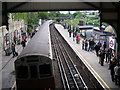
West Brompton station - an under-used interchange
This photograph shows the London Transport District Line station, with a southbound train of D78 stock just departing for Wimbledon. To the right is the main line station, which was closed in 1940 and later demolished, but in the late 1990s it was rebuilt and reopened. It now has an hourly service each way from Brighton to Watford Junction, and a half-hourly service from Clapham Junction to Willesden Junction. If more passengers were aware of the convenience of this interchange, it would see much heavier use.
Image: © Dr Neil Clifton
Taken: 25 May 2006
0.06 miles