
IMAGES TAKEN NEAR TO
Rebbecks Meadow, MARLBOROUGH, SN8 4DQ
Introduction
This page details the photographs taken nearby to Rebbecks Meadow, SN8 4DQ by members of the Geograph project.
The Geograph project started in 2005 with the aim of publishing, organising and preserving representative images for every square kilometre of Great Britain, Ireland and the Isle of Man.

There are currently over 7.5m images from over14,400 individuals and you can help contribute to the project by visiting https://www.geograph.org.uk
Image Map
Images are licensed for reuse under creativecommons.org/licenses/by-sa/2.0
Notes
- Clicking on the map will re-center to the selected point.
- The higher the marker number, the further away the image location is from the centre of the postcode.
Image Listing (38 Images Found)
Images are licensed for reuse under creativecommons.org/licenses/by-sa/2.0
Image
Details
Distance
1
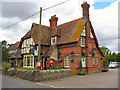
Who'd A Thought It Pub, Lockeridge
The village pub of Lockeridge
Image: © Chris Collard
Taken: 10 Aug 2005
0.03 miles
2
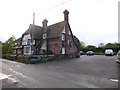
Lockeridge, Who'd A Thought it
Village pub with a humorous name; internally, straight back bar, with dining at front, drinking area with pool and darts at back. Cask ales on offer at my visit: Wadworths 6X, Bishop's Tipple, Henry's. http://www.whodathoughtitpub.co.uk/
Image: © Mike Faherty
Taken: 3 Nov 2013
0.04 miles
3
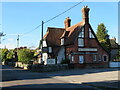
The 'Who'd a thought it' pub in Lockeridge
There's no historic parish church in Lockeridge, but it does have a primary school and this well known pub.
Image: © Gordon Hatton
Taken: 24 Sep 2022
0.04 miles
4
![Lockeridge buildings [2]](https://s2.geograph.org.uk/geophotos/06/35/78/6357894_bdc8729e_120x120.jpg)
Lockeridge buildings [2]
The Who'd A Thought It public house was built in the 1870s.
Lockeridge has evidence of occupation since the Stone Age including Roman, and the village is in the Domesday Book of 1086. It expanded from a hamlet to a village in the 1870s when Sir Henry Meux sited his estate office yard there. Estate houses, a school and a public house were built at the same time.
Image: © Michael Dibb
Taken: 2 Sep 2019
0.04 miles
6
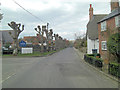
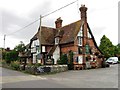
Lime pollards in Lockeridge
Although these pollarded trees will furnish themselves with a cloak of fresh green epicormic growth in the spring, I dislike their winter appearance.
Image: © Stuart Logan
Taken: 29 Mar 2013
0.06 miles
7
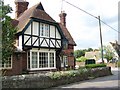
The Who'd A Thought It, Lockeridge
The village of Lockeridge is served by this pub - the centre of the community.
Image: © Maigheach-gheal
Taken: 9 Aug 2009
0.06 miles
8
![Lockeridge houses [13]](https://s0.geograph.org.uk/geophotos/06/35/78/6357880_72930a19_120x120.jpg)
Lockeridge houses [13]
Numbers 51 and 52 Lockeridge are two delightful thatched properties alongside the road.
Lockeridge has evidence of occupation since the Stone Age including Roman, and the village is in the Domesday Book of 1086. It expanded from a hamlet to a village in the 1870s when Sir Henry Meux sited his estate office yard there. Estate houses, a school and a public house were built at the same time.
Image: © Michael Dibb
Taken: 2 Sep 2019
0.06 miles
9
![Path leaves the road [1]](https://s1.geograph.org.uk/geophotos/06/35/78/6357885_678f0dea_120x120.jpg)
Path leaves the road [1]
This short footpath leaves the road alongside number 50 with an unusual warning sign.
Lockeridge has evidence of occupation since the Stone Age including Roman, and the village is in the Domesday Book of 1086. It expanded from a hamlet to a village in the 1870s when Sir Henry Meux sited his estate office yard there. Estate houses, a school and a public house were built at the same time.
Image: © Michael Dibb
Taken: 2 Sep 2019
0.06 miles
10
![Lockeridge houses [12]](https://s2.geograph.org.uk/geophotos/06/35/78/6357878_66ec7257_120x120.jpg)
Lockeridge houses [12]
Numbers 47, 48 and 49 Lockeridge are three estate cottages of the 1870s. An attractive feature is the gable barge boards sweeping down to meet the porch barge boards. Listed, grade II, with details at: https://historicengland.org.uk/listing/the-list/list-entry/1365930
Lockeridge has evidence of occupation since the Stone Age including Roman, and the village is in the Domesday Book of 1086. It expanded from a hamlet to a village in the 1870s when Sir Henry Meux sited his estate office yard there. Estate houses, a school and a public house were built at the same time.
Image: © Michael Dibb
Taken: 2 Sep 2019
0.07 miles