
IMAGES TAKEN NEAR TO
Streatham Hill, LONDON, SW2 4TL
Introduction
This page details the photographs taken nearby to Streatham Hill, SW2 4TL by members of the Geograph project.
The Geograph project started in 2005 with the aim of publishing, organising and preserving representative images for every square kilometre of Great Britain, Ireland and the Isle of Man.

There are currently over 7.5m images from over14,400 individuals and you can help contribute to the project by visiting https://www.geograph.org.uk
Image Map
Images are licensed for reuse under creativecommons.org/licenses/by-sa/2.0
Notes
- Clicking on the map will re-center to the selected point.
- The higher the marker number, the further away the image location is from the centre of the postcode.
Image Listing (111 Images Found)
Images are licensed for reuse under creativecommons.org/licenses/by-sa/2.0
Image
Details
Distance
1
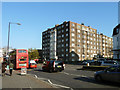
Corner Fielde
This is the name of the block of flats on the corner.
Image: © Robin Webster
Taken: 19 Nov 2011
0.03 miles
2
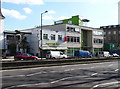
39-43 Streatham Hill
No. 39 is a small two-storey rendered house. The building on the right is a 1960s office block currently used as a healthcare centre. They are within the Streatham High Road and Streatham Hill Conservation Area for their group value.
The course of Streatham High Road has been a major highway between London and Sussex since Roman times. Its current appearance is largely attributable to two major spells of development. The first was during the late C19th following the opening of Streatham Hill station in 1856, and the second was after 1911 when the line to Victoria was electrified. Though much-maligned and undoubtedly blighted by heavy traffic, closer examination reveals that the road is lined with a number of interesting buildings, some of which reflect the period between the wars when Streatham was a fashionable centre of entertainment. Information from Lambeth Council (http://www.lambeth.gov.uk/NR/exeres/CE4B5CE1-0387-40ED-B5A9-273A5160C34A.htm ).
Image: © Stephen Richards
Taken: Unknown
0.03 miles
3
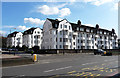
Wavertree Court, Streatham Hill
Next to Corner Fielde, more large blocks of flats, though designed in a quite different style. By Frank Harrington in 1933, with Dutch-style shaped gables, mansard roofs, metal Crittall-style windows, and white rendered walls. It is within the Streatham High Road and Streatham Hill Conservation Area.
The course of Streatham High Road has been a major highway between London and Sussex since Roman times. Its current appearance is largely attributable to two major spells of development. The first was during the late C19th following the opening of Streatham Hill station in 1856, and the second was after 1911 when the line to Victoria was electrified. Though much-maligned and undoubtedly blighted by heavy traffic, closer examination reveals that the road is lined with a number of interesting buildings, some of which reflect the period between the wars when Streatham was a fashionable centre of entertainment. Information from Lambeth Council (http://www.lambeth.gov.uk/NR/exeres/CE4B5CE1-0387-40ED-B5A9-273A5160C34A.htm ).
Image: © Stephen Richards
Taken: Unknown
0.03 miles
4
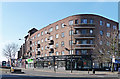
Telford Parade Mansions, Streatham Hill
Designed, like the neighbouring block, by Verity, Beverley and Homer in c1935. It curves round into Telford Avenue, and has a number of balconies, and shops on the ground floor. It is within the Streatham High Road and Streatham Hill Conservation Area.
The course of Streatham High Road has been a major highway between London and Sussex since Roman times. Its current appearance is largely attributable to two major spells of development. The first was during the late C19th following the opening of Streatham Hill station in 1856, and the second was after 1911 when the line to Victoria was electrified. Though much-maligned and undoubtedly blighted by heavy traffic, closer examination reveals that the road is lined with a number of interesting buildings, some of which reflect the period between the wars when Streatham was a fashionable centre of entertainment. Information from Lambeth Council (http://www.lambeth.gov.uk/NR/exeres/CE4B5CE1-0387-40ED-B5A9-273A5160C34A.htm ).
Image: © Stephen Richards
Taken: Unknown
0.04 miles
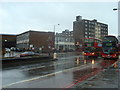
6
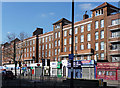
Telford Court, Streatham Hill
A sizeable block of flats, with shops, designed by Frank Harrington in 1931. The most distinctive features are the four pantiled belvederes with arched openings. It is within the Streatham High Road and Streatham Hill Conservation Area.
The course of Streatham High Road has been a major highway between London and Sussex since Roman times. Its current appearance is largely attributable to two major spells of development. The first was during the late C19th following the opening of Streatham Hill station in 1856, and the second was after 1911 when the line to Victoria was electrified. Though much-maligned and undoubtedly blighted by heavy traffic, closer examination reveals that the road is lined with a number of interesting buildings, some of which reflect the period between the wars when Streatham was a fashionable centre of entertainment. Information from Lambeth Council (http://www.lambeth.gov.uk/NR/exeres/CE4B5CE1-0387-40ED-B5A9-273A5160C34A.htm ).
Image: © Stephen Richards
Taken: Unknown
0.04 miles
7
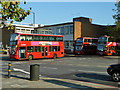
Bus leaving Brixton Garage
Fleet number DW68 is displaying blinds for route 137 to Marble Arch. DW234 and DW81 are parked flanking the garage exit.
Image: © Robin Webster
Taken: 19 Nov 2011
0.05 miles
8
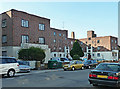
Telford Avenue Mansions, Telford Avenue
Designed by Frank Verity, Beverley and Homer in c1935. A typical 30s block of flats with metal Crittall windows, and "attractive sunray metalwork" above the front doors. It is within the Streatham High Road and Streatham Hill Conservation Area.
Information from Lambeth Council (http://www.lambeth.gov.uk/NR/exeres/CE4B5CE1-0387-40ED-B5A9-273A5160C34A.htm ).
Image: © Stephen Richards
Taken: Unknown
0.05 miles
9
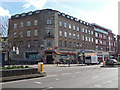
45-47 Streatham Hill
The brick corner block was built c1955 after the previous occupier of the spot was destroyed by a flying bomb on 24th June 1944. It was extended in the same style to the right, c1962. The building on the far right is a recent addition on the former site of Warwick Wright garage which preserves the scale, but is otherwise without merit.
Image: © Stephen Richards
Taken: Unknown
0.05 miles
10
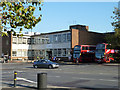
Arriva London South offices
At Brixton bus garage.
Image: © Robin Webster
Taken: 19 Nov 2011
0.06 miles