
IMAGES TAKEN NEAR TO
Baker Street, LONDON, NW1 5TF
Introduction
This page details the photographs taken nearby to Baker Street, NW1 5TF by members of the Geograph project.
The Geograph project started in 2005 with the aim of publishing, organising and preserving representative images for every square kilometre of Great Britain, Ireland and the Isle of Man.

There are currently over 7.5m images from over14,400 individuals and you can help contribute to the project by visiting https://www.geograph.org.uk
Image Map
Images are licensed for reuse under creativecommons.org/licenses/by-sa/2.0
Notes
- Clicking on the map will re-center to the selected point.
- The higher the marker number, the further away the image location is from the centre of the postcode.
Image Listing (1081 Images Found)
Images are licensed for reuse under creativecommons.org/licenses/by-sa/2.0
Image
Details
Distance
1

Information Board at Baker Street Underground Station (2)
This information board, erected by Transport for London, is located on Platform 9 (Northbound) of the Bakerloo line. It has the following wording and images:
Baker Street station history. Find out more at ltmuseum.co.uk
In 1911, Metropolitan Railway architect Charles W. Clark created a single ticket hall for Baker Street station, along with railway offices above.
Clark also designed Chiltern Court, the block of flats constructed above the station in the 1920s. It contained (when it opened) 180 flats, which were occupied by famous residents such as the writer H.G. Wells. This block was underwritten by the Metropolitan Railway, which profited from the property development. Indeed, the station was so linked with the identity of the Metropolitan Railway that the station houses a memorial to the company's employees who died in the First World War.
By the 1920's, the station's platforms had largely fallen into their current alignment. The station was renovated mid-decade to forestall potential congestion from the crowds expected to attend the 1924-1925 British Empire Exhibition at Wembley.
In the 1970s, the Stanmore branch of the Bakerloo line became the Jubilee line, with new tunnels constructed from Baker Street to its then-terminus, Charing Cross. (The Jubilee line was re-routed from Charing Cross when the line was extended in 1999). The platforms at Baker Street were renovated around this time to reflect the most famous (albeit fictional) local resident - Sherlock Holmes.
In an average year, more than 28 million journeys start or end at Baker Street.
1957: This image shows the signage added between the Hammersmith & City line and the rest of the station, advertising the services provided by the Metropolitan line (top left)
1979: This poster was used to advertise the change from the Bakerloo to the Jubilee line, as stations north of Baker Street made the switch with the opening of the new line (lower left)
2015: The Bakerloo line platforms feature tiles bearing a Sherlock Holmes pattern (top right)
2019: In the 1920s, the Metropolitan Railway constructed Chiltern Court above the station. Both Chiltern Court and the station's exterior here were designed by the architect Charles W Clark (lower right)
Image: © David Hillas
Taken: 14 Mar 2025
0.00 miles
3
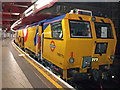
Matisa B45 Tamping Machine, Baker Street, London Underground (1)
Matisa B45 Tamping Machine TMM775 at Baker Street tube station.
See also: Image]
Image: © Free Man
Taken: 9 Mar 2019
0.01 miles
7
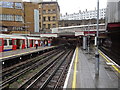
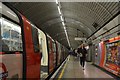
Baker Street Underground station, London
Opened in 1863 by the Metropolitan Railway on the line from Farringdon Street to Paddington Bishop's Road (later to Hammersmith), the 'Met' extended to St Johns Wood and beyond in 1868, which is when these platforms were created. They were rebuilt in the 1920s to cater for increased traffic.
View south towards the junction with the Circle and Hammersmith & City lines.
Image: © Nigel Thompson
Taken: 23 Aug 2018
0.01 miles
8
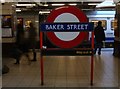
Platform sign, Baker Street Underground Station
Image: © Robin Sones
Taken: 8 Dec 2012
0.01 miles
10
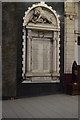
Passage, Baker Street Underground Station
Image: © Robin Sones
Taken: 18 Apr 2020
0.01 miles