
IMAGES TAKEN NEAR TO
Capper Road, CAMBRIDGE, CB25 9NZ
Introduction
This page details the photographs taken nearby to Capper Road, CB25 9NZ by members of the Geograph project.
The Geograph project started in 2005 with the aim of publishing, organising and preserving representative images for every square kilometre of Great Britain, Ireland and the Isle of Man.

There are currently over 7.5m images from over14,400 individuals and you can help contribute to the project by visiting https://www.geograph.org.uk
Image Map
Images are licensed for reuse under creativecommons.org/licenses/by-sa/2.0
Notes
- Clicking on the map will re-center to the selected point.
- The higher the marker number, the further away the image location is from the centre of the postcode.
Image Listing (68 Images Found)
Images are licensed for reuse under creativecommons.org/licenses/by-sa/2.0
Image
Details
Distance
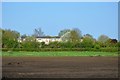
3
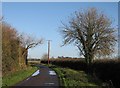
Bannold Drove
Overnight rain left puddles by the roadside - rarities in the unusually dry winter, spring and autumn of 2011.
Image: © John Sutton
Taken: 25 Nov 2011
0.02 miles
4
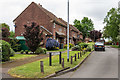
Capper Road
Housing originally built as married quarters for personnel at RAF Waterbeach/Waterbeach Royal Engineer base. Following closure of the base in 2013, the houses were transferred in stages to Annington Homes who refurbished them for onward sale or letting.
Although I have seen no specific evidence of the origin of the name, the airbase and Royal Engineers connection coupled with Capper Road coming off nearby Cody Road points to it commemorating Colonel John Capper RE. Colonel Capper, later Major-General Sir John Capper KCB KCVO, along with American entrepreneur Samuel Franklin Cody, was involved in the development of Britain's first powered military aircraft, a semi-rigid airship named Nulli Secundus, including being at the controls of its maiden flight at Farnborough on 10 September 1907 and a longer flight on 5 October 1907 from Farnborough over central London before landing at Crystal Palace. They then became involved in the development of fixed wing aircraft, with Cody designing and building British Army Aeroplane Number 1, which on 16 October 1908 undertook the first sustained aeroplane flight in the UK.
Image: © Ian Capper
Taken: 2 May 2014
0.03 miles
5
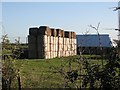
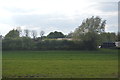
Bales at Midload Farm
The overhead wires of the Cambridge-Ely railway line are in the background of this picture taken through the hedge from Bannold Drove on a bright November morning.
Image: © John Sutton
Taken: 25 Nov 2011
0.05 miles
6
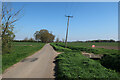
Bannold Drove
Past the access route to the proposed relocated Waterbeach railway station.
Image: © Hugh Venables
Taken: 18 Apr 2023
0.06 miles
7
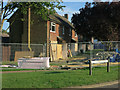
Former Waterbeach Barracks
Barracks accommodation on Fletcher Avenue being refurbished for civilian use.
Image: © Hugh Venables
Taken: 24 Jul 2014
0.07 miles
8
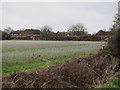
Waterbeach Barracks
The barracks, home to 39 Engineer Regiment, is to close by 2015 and be sold off for housing.
Image: © Hugh Venables
Taken: 18 Mar 2012
0.07 miles
9
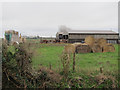
Midload Farm
Cattle still in the barns.
Image: © Hugh Venables
Taken: 18 Mar 2012
0.07 miles
10
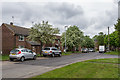
Capper Road
Housing originally built as married quarters for personnel at RAF Waterbeach/Waterbeach Royal Engineer base. Following closure of the base in 2013, the houses were transferred in stages to Annington Homes who refurbished them for onward sale or letting.
Although I have seen no specific evidence of the origin of the name, the airbase and Royal Engineers connection coupled with Capper Road coming off nearby Cody Road points to it commemorating Colonel John Capper RE. Colonel Capper, later Major-General Sir John Capper KCB KCVO, along with American entrepreneur Samuel Franklin Cody, was involved in the development of Britain's first powered military aircraft, a semi-rigid airship named Nulli Secundus, including being at the controls of its maiden flight at Farnborough on 10 September 1907 and a longer flight on 5 October 1907 from Farnborough over central London before landing at Crystal Palace. They then became involved in the development of fixed wing aircraft, with Cody designing and building British Army Aeroplane Number 1, which on 16 October 1908 undertook the first sustained aeroplane flight in the UK.
Image: © Ian Capper
Taken: 2 May 2014
0.07 miles