
Overview for Alscot Avenue, LIVERPOOL, L10 0AY
Summary for Alscot Avenue, LIVERPOOL, L10 0AY
Roadworks near L10 0AY
Road Safety near L10 0AY
Details of personal injury accidents in and around Alscot Avenue, L10 0AY that have been reported to Merseyside Police over the past 20 years.
Traffic Levels near L10 0AY
View traffic levels near Alscot Avenue, L10 0AY from official Department for Transport counts.
Images taken near to Alscot Avenue, L10 0AY and the surrounding area
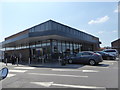

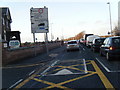
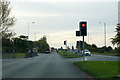
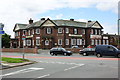
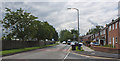
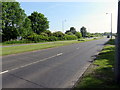
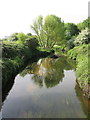
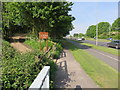
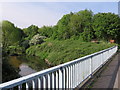
Please click the More button for more images, licensing and image copyright information.
Liverpool and nearby Videos From YouTube
4K Drone Footage Of Victorian Church In Crosby Sunset
Liverpool Drone Services via EFP Drone Footage. Drone footage for Construction, Property Management, Advertising, Media, ...
Channel: EFP Drone Footage (View Channel)
Published: 8 May 2023
Police
This area is policed by Merseyside Police.
Merseyside Police split their policing area into 139 separate neighbourhoods and this postcode is in the Cherryfield neighbourhood.

Cherryfield Neighbourhood Crime
Top 3 Categories
For full details of all categories together with more crime information, click on the Details button.
Member of UK Parliament
This postcode is in the Knowsley parliamentary constituency.
Knowsley is a constituency in the North West region of England. The seat has been held by Anneliese Midgley (Labour) since July 2024.

Most Recent House Sales for Alscot Avenue, L10 0AY
27 Nov 2025
29 Jun 2017
31 Oct 2014
30 Jan 2006
Electricity Supply Emergency Code
Local Petrol Station Prices
Coordinates for L10 0AY
Residents at L10 0AY
Sunrise and Sunset at L10 0AY
Traffic Emission and Congestion Zones
Historical Weather Summary
| Clear | 18.56% |
| Cloudy | 63.85% |
| Rain | 6.89% |
| Windy | 10.62% |
| Other | 0.08% |
Population
Deprivation Index
the more deprived the postcode
Average Energy Performance
Companies Registered at L10 0AY
Postcode Details for L10 0AY
Recent Updates
|
15 Feb 2026 Schools Data Updated February 2026 |
|
4 Feb 2026 Police and Crime data updated for December 2025 |
|
31 Jan 2026 Energy Performance Certificates (England and Wales) updated December 2025 |
|
29 Jan 2026 Sold House Price data updated for December 2025 |
|
17 Jan 2026 Schools Data Updated January 2026 |
|
6 Jan 2026 Police and Crime data updated for November 2025 |
|
2 Jan 2026 Sold House Price data updated for November 2025 |
|
28 Dec 2025 Energy Performance Certificates (England and Wales) updated November 2025 |
Random Postcodes
Want an idea of what is in our extensive website? Try somewhere completely random!
The Rural/Urban classification is based upon data collected during the 2011 Census and released in August 2013 and is categorised into 6 distinct classes.
[A] Urban Major conurbation: A built up area with a population of 10,000 (3,000 in Scotland) or more and is assigned to the major conurbation settlement category.
[B] Urban Minor conurbation: A built up area with a population of 10,000 (3,000 in Scotland) or more and is assigned to the minor conurbation settlement category.
[C] Urban City and town: A built up area with a population of 10,000 (3,000 in Scotland) or more and is assigned to the city and town settlement category.
[D] Rural Town and fringe
[E] Rural Village
[F] Rural Hamlet and isolated dwelling
The Index of Multiple Deprivation (IMD) is the official measure of relative deprivation.
The index is based on 39 separate indicators across seven distinct domains (Income; Employment; Health and Disability; Education, Skills and Training; Crime; Barriers to Housing and Services; Living Environment) to provide an overall measure of multiple deprivation and is calculated for every neighbourhood.
The index is relative rather than an absolute scale and so a neighbourhood with a score of 10 is more deprived than one rated 20, but this does not equate to being twice as deprived.
Please note: Different indices are used in England, Scotland, Wales and Northern Ireland and so comparison of scores from neighbourhoods in different countries should not be undertaken.
These figures report on incorporated UK companies only that are registered at this postcode and do not include sole-traders, partnerships or overseas organisations.
The population figure shown for your area are an estimate provided by the Office for National Statistics and is rounded to the nearest 1,000.
The estimates are derived from the Annual Population Survey (APS) which is the Labour Force Survey (LFS) plus various sample boosts.
There are 36 metropolitan district councils which together cover 6 large urban areas: the counties of Greater Manchester, Merseyside, South Yorkshire, Tyne and Wear, West Midlands, and West Yorkshire.
Metropolitan districts are responsible for all services in their area, although certain conurbation wide services such as fire and civil defence, police, waste disposal and passenger transport are provided through joint authorities (the districts acting jointly).