
IMAGES TAKEN NEAR TO
Clarendon Road, NORWICH, NR2 2PN
Introduction
This page details the photographs taken nearby to Clarendon Road, NR2 2PN by members of the Geograph project.
The Geograph project started in 2005 with the aim of publishing, organising and preserving representative images for every square kilometre of Great Britain, Ireland and the Isle of Man.

There are currently over 7.5m images from over14,400 individuals and you can help contribute to the project by visiting https://www.geograph.org.uk
Image Map
Images are licensed for reuse under creativecommons.org/licenses/by-sa/2.0
Notes
- Clicking on the map will re-center to the selected point.
- The higher the marker number, the further away the image location is from the centre of the postcode.
Image Listing (585 Images Found)
Images are licensed for reuse under creativecommons.org/licenses/by-sa/2.0
Image
Details
Distance
1

A terrace of houses in Clarendon Road
The house in the foreground at right is home to the sk:n clinic which offers treatment for various skin conditions.
Image: © Evelyn Simak
Taken: 3 Jul 2018
0.04 miles
2

View along Clarendon Road
Clarendon Road and neighbouring streets were developed in the late 19th century on land owned by Colonel Unthank. The street layout was planned by the Norwich architect E Boardman and the houses were then rented to the middle and skilled artisan classes.
Image: © Evelyn Simak
Taken: 3 Jul 2018
0.04 miles

4
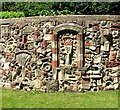
The Plantation Garden - Cosseyware
For a wider view of this wall see > http://www.geograph.org.uk/photo/5807812. From the 1830s to 1915, George Gunton and from 1868 onwards his sons William and George, made a range of ornamental bricks which they called Cosseyware, at their brickyard in Costessey (pronounced Cossey). Among a number of brickyards in the area, the Guntons' perhaps had the greatest effect on Norwich housebuilding in that two of Norwich's foremost architects, Edward Boardman and George Skipper, both used Cosseyware in their buildings.
Image: © Evelyn Simak
Taken: 13 Jun 2018
0.06 miles
5
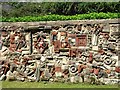
The Plantation Garden - Cosseyware
For a wider view of this wall see > http://www.geograph.org.uk/photo/5807812. From the 1830s to 1915, George Gunton and from 1868 onwards his sons William and George, made a range of ornamental bricks which they called Cosseyware, at their brickyard in Costessey (pronounced Cossey). Among a number of brickyards in the area, the Guntons' perhaps had the greatest effect on Norwich housebuilding in that two of Norwich's foremost architects, Edward Boardman and George Skipper, both used Cosseyware in their buildings.
Image: © Evelyn Simak
Taken: 13 Jun 2018
0.06 miles
6
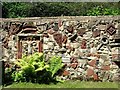
The Plantation Garden - Cosseyware
For a wider view of this wall see > http://www.geograph.org.uk/photo/5807812. From the 1830s to 1915, George Gunton and from 1868 onwards his sons William and George, made a range of ornamental bricks which they called Cosseyware, at their brickyard in Costessey (pronounced Cossey). Among a number of brickyards in the area, the Guntons' perhaps had the greatest effect on Norwich housebuilding in that two of Norwich's foremost architects, Edward Boardman and George Skipper, both used Cosseyware in their buildings.
Image: © Evelyn Simak
Taken: 13 Jun 2018
0.06 miles
7
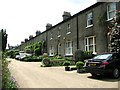
Terraced houses at Chester Place
See also > http://www.geograph.org.uk/photo/5807649. This terrace of seven houses, was designed by Edward Boardman and built in the 1860s by Henry Trevor who also created the nearby Plantation Garden > https://www.geograph.org.uk/snippet/17897. The low walls between the houses are very similar to the balustrades in the garden and the pedestals contain flints and ornamental bricks from the Gunton brothers' brickworks in Costessey.
Image: © Evelyn Simak
Taken: 13 Jun 2018
0.06 miles
8

The Plantation Garden - Italianate terraces Cosseyware
At the southern end of the garden, these can be walked up where a path continues at a higher level. Like all other walls in the garden, the walls of the terraces > https://www.geograph.org.uk/photo/5807833 contain many examples of Cosseyware. The upper two terracotta tiles with shields of arms depicted here show arms belonging to the Amherst, Daniel, Tyssen and Mitford families and were perhaps commissioned by William Amhurst Tyssen-Amherst of Foulden Hall, Didlington, who married Margaret Mitford in 1856, and became MP for Norfolk in the 1880s. Gunton Bros perhaps made this tile for when the hall was enlarged, as they are documented to have made other heraldic tiles, for instance for the Bedingfield family at Oxburgh Hall and which can also be found in the garden.
From the 1830s to 1915, George Gunton and from 1868 onwards his sons William and George, made a range of ornamental bricks which they called Cosseyware, at their brickyard in Costessey (pronounced Cossey). Among a number of brickyards in the area, the Guntons' perhaps had the greatest effect on Norwich housebuilding in that two of Norwich's foremost architects, Edward Boardman and George Skipper, both used Cosseyware in their buildings.
Image: © Evelyn Simak
Taken: 13 Jun 2018
0.06 miles

10

The Plantation Garden - Italianate terraces
At the southern end of the garden, these can be walked up where a path continues at a higher level. Like all other walls in the garden, the walls of the terraces contain examples of Cosseyware > http://www.geograph.org.uk/photo/5807852.
From the 1830s to 1915, George Gunton and from 1868 onwards his sons William and George, made a range of ornamental bricks which they called Cosseyware, at their brickyard in Costessey (pronounced Cossey). Among a number of brickyards in the area, the Guntons' perhaps had the greatest effect on Norwich housebuilding in that two of Norwich's foremost architects, Edward Boardman and George Skipper, both used Cosseyware in their buildings.
Image: © Evelyn Simak
Taken: 13 Jun 2018
0.06 miles