
IMAGES TAKEN NEAR TO
Woodrow Place, NORWICH, NR1 4PF
Introduction
This page details the photographs taken nearby to Woodrow Place, NR1 4PF by members of the Geograph project.
The Geograph project started in 2005 with the aim of publishing, organising and preserving representative images for every square kilometre of Great Britain, Ireland and the Isle of Man.

There are currently over 7.5m images from over14,400 individuals and you can help contribute to the project by visiting https://www.geograph.org.uk
Image Map
Images are licensed for reuse under creativecommons.org/licenses/by-sa/2.0
Notes
- Clicking on the map will re-center to the selected point.
- The higher the marker number, the further away the image location is from the centre of the postcode.
Image Listing (148 Images Found)
Images are licensed for reuse under creativecommons.org/licenses/by-sa/2.0
Image
Details
Distance
1
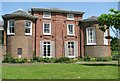
Mousehold House - south elevation
Mousehold House > https://www.geograph.org.uk/photo/6195717 is a Grade 2 listed 18th century house with additions by William Mear dating from 1820. The two-storey building has a hipped slate roof and two plain Tuscan pilasters and four Tuscan columns supporting a massive pedimented portico over the entrance > https://www.geograph.org.uk/photo/6195722 and early 19th century bow-fronted wings (depicted here) to the right and left of the main building, one of which carrying a reset plaque with the inscription 'Lt.Colonel/Six R. Harvey/1821'. Mousehold House was converted to flats in 1969, and today it is surrounded by a 20th century housing development (Woodrow Park) constructed in the former grounds of the house, and by blocks of flats (William Mear Gardens) adjoining immediately in the north.
Sir Robert John Harvey (1817- 1870) purchased the Mousehold Estate in the early 19th century and it is reported that he recovered the cost of purchasing the house by the sale of timber from the estate. Sir Robert was a senior partner in the Harvey & Hudson Bank, which had been founded by Robert Harvey (1730-1816), his great grandfather in 1792 and had been run by various members of the family over the following years. In its heyday the bank had some 30 branches (13 in Norfolk, 12 in Suffolk and 5 in Cambridgeshire) and more than 3000 depositors. Sir Robert was in full control in the 1860s and enjoyed a good life style while he rebuilt his house at Crown Point in Trowse > https://www.geograph.org.uk/photo/4769135. It was during this time that he speculated on the stock exchange, and then hid his losses by noting them as debts from fictitious customers. Once it was discovered that Sir Robert had created a series of false accounts to underwrite his share speculation, leaving the bank with an estimated £1.6 million of debts against £1 million of assets, and Sir Robert was no longer able to hide the debt, he shot himself at his home in Crown Point and swift action was subsequently taken by the remaining directors of the Bank who promptly filed a petition for bankruptcy to protect the bank's assets, followed by the sale of the business and premises to Messrs Gurney & Co, which later became Barclays.
Image: © Evelyn Simak
Taken: 29 Jun 2019
0.03 miles
2
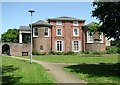
Mousehold House - south elevation
Mousehold House > https://www.geograph.org.uk/photo/6195717 is a Grade 2 listed 18th century house with additions by William Mear dating from 1820. The two-storey building has a hipped slate roof and two plain Tuscan pilasters and four Tuscan columns supporting a massive pedimented portico over the entrance > https://www.geograph.org.uk/photo/6195722 and early 19th century bow-fronted wings (depicted here) to the right and left of the main building, one of which carrying a reset plaque with the inscription 'Lt.Colonel/Six R. Harvey/1821'. Mousehold House was converted to flats in 1969, and today it is surrounded by a 20th century housing development (Woodrow Park) constructed in the former grounds of the house, and by blocks of flats (William Mear Gardens) adjoining immediately in the north.
Sir Robert John Harvey (1817- 1870) purchased the Mousehold Estate in the early 19th century and it is reported that he recovered the cost of purchasing the house by the sale of timber from the estate. Sir Robert was a senior partner in the Harvey & Hudson Bank, which had been founded by Robert Harvey (1730-1816), his great grandfather in 1792 and had been run by various members of the family over the following years. In its heyday the bank had some 30 branches (13 in Norfolk, 12 in Suffolk and 5 in Cambridgeshire) and more than 3000 depositors. Sir Robert was in full control in the 1860s and enjoyed a good life style while he rebuilt his house at Crown Point in Trowse > https://www.geograph.org.uk/photo/4769135. It was during this time that he speculated on the stock exchange, and then hid his losses by noting them as debts from fictitious customers. Once it was discovered that Sir Robert had created a series of false accounts to underwrite his share speculation, leaving the bank with an estimated £1.6 million of debts against £1 million of assets, and Sir Robert was no longer able to hide the debt, he shot himself at his home in Crown Point and swift action was subsequently taken by the remaining directors of the Bank who promptly filed a petition for bankruptcy to protect the bank's assets, followed by the sale of the business and premises to Messrs Gurney & Co, which later became Barclays.
Image: © Evelyn Simak
Taken: 29 Jun 2019
0.03 miles
3
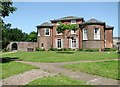
Mousehold House - south elevation
Mousehold House > https://www.geograph.org.uk/photo/6195717 is a Grade 2 listed 18th century house with additions by William Mear dating from 1820. The two-storey building has a hipped slate roof and two plain Tuscan pilasters and four Tuscan columns supporting a massive pedimented portico over the entrance > https://www.geograph.org.uk/photo/6195722 and early 19th century bow-fronted wings (depicted here) to the right and left of the main building, one of which carrying a reset plaque with the inscription 'Lt.Colonel/Six R. Harvey/1821'. Mousehold House was converted to flats in 1969, and today it is surrounded by a 20th century housing development (Woodrow Park) constructed in the former grounds of the house, and by blocks of flats (William Mear Gardens) adjoining immediately in the north.
Sir Robert John Harvey (1817- 1870) purchased the Mousehold Estate in the early 19th century and it is reported that he recovered the cost of purchasing the house by the sale of timber from the estate. Sir Robert was a senior partner in the Harvey & Hudson Bank, which had been founded by Robert Harvey (1730-1816), his great grandfather in 1792 and had been run by various members of the family over the following years. In its heyday the bank had some 30 branches (13 in Norfolk, 12 in Suffolk and 5 in Cambridgeshire) and more than 3000 depositors. Sir Robert was in full control in the 1860s and enjoyed a good life style while he rebuilt his house at Crown Point in Trowse > https://www.geograph.org.uk/photo/4769135. It was during this time that he speculated on the stock exchange, and then hid his losses by noting them as debts from fictitious customers. Once it was discovered that Sir Robert had created a series of false accounts to underwrite his share speculation, leaving the bank with an estimated £1.6 million of debts against £1 million of assets, and Sir Robert was no longer able to hide the debt, he shot himself at his home in Crown Point and swift action was subsequently taken by the remaining directors of the Bank who promptly filed a petition for bankruptcy to protect the bank's assets, followed by the sale of the business and premises to Messrs Gurney & Co, which later became Barclays.
Image: © Evelyn Simak
Taken: 29 Jun 2019
0.03 miles
4

22-spot ladybird (Psyllobara 22-punctata)
This tiny ladybird measures only three to four milimetres and can commonly be found in grassland. Unlike most other ladybird species, who feed on aphids, the 22-spot ladybird feeds on mildew.
Image: © Evelyn Simak
Taken: 1 May 2019
0.04 miles
6

22-spot ladybird (Psyllobara 22-punctata)
This tiny ladybird measures only three to four milimetres and can commonly be found in grassland. Unlike most other ladybird species, who feed on aphids, the 22-spot ladybird feeds on mildew.
Image: © Evelyn Simak
Taken: 1 May 2019
0.04 miles
7
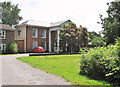
Mousehold House
Mousehold House is a Grade 2 listed 18th century house with additions by William Mear dating from 1820. The two-storey building has a hipped slate roof and two plain Tuscan pilasters and four Tuscan columns supporting a massive pedimented portico over the entrance > https://www.geograph.org.uk/photo/6195722 and early 19th century bow-fronted wings > https://www.geograph.org.uk/photo/6195727 to the right and left of the main building, one of which carrying a reset plaque with the inscription 'Lt.Colonel/Six R. Harvey/1821'. Mousehold House was converted to flats in 1969, and today it is surrounded by a 20th century housing development (Woodrow Park) constructed in the former grounds of the house, and by blocks of flats (William Mear Gardens) adjoining immediately in the north.
Sir Robert John Harvey (1817- 1870) purchased the Mousehold Estate in the early 19th century and it is reported that he recovered the cost of purchasing the house by the sale of timber from the estate. Sir Robert was a senior partner in the Harvey & Hudson Bank, which had been founded by Robert Harvey (1730-1816), his great grandfather in 1792 and had been run by various members of the family over the following years. In its heyday the bank had some 30 branches (13 in Norfolk, 12 in Suffolk and 5 in Cambridgeshire) and more than 3000 depositors. Sir Robert was in full control in the 1860s and enjoyed a good life style while he rebuilt his house at Crown Point in Trowse > https://www.geograph.org.uk/photo/4769135. It was during this time that he speculated on the stock exchange, and then hid his losses by noting them as debts from fictitious customers. Once it was discovered that Sir Robert had created a series of false accounts to underwrite his share speculation, leaving the bank with an estimated £1.6 million of debts against £1 million of assets, and Sir Robert was no longer able to hide the debt, he shot himself at his home in Crown Point and swift action was subsequently taken by the remaining directors of the Bank who promptly filed a petition for bankruptcy to protect the bank's assets, followed by the sale of the business and premises to Messrs Gurney & Co, which later became Barclays.
Image: © Evelyn Simak
Taken: 29 Jun 2019
0.04 miles
8
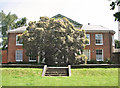
Mousehold House - west elevation and entrance
Mousehold House is a Grade 2 listed 18th century house with additions by William Mear dating from 1820. The two-storey building has a hipped slate roof and two plain Tuscan pilasters and four Tuscan columns supporting a massive pedimented portico over the entrance > https://www.geograph.org.uk/photo/6195722 and early 19th century bow-fronted wings > https://www.geograph.org.uk/photo/6195727 to the right and left of the main building, one of which carrying a reset plaque with the inscription 'Lt.Colonel/Six R. Harvey/1821'. Mousehold House was converted to flats in 1969, and today it is surrounded by a 20th century housing development (Woodrow Park) constructed in the former grounds of the house, and by blocks of flats (William Mear Gardens) adjoining immediately in the north.
Sir Robert John Harvey (1817- 1870) purchased the Mousehold Estate in the early 19th century and it is reported that he recovered the cost of purchasing the house by the sale of timber from the estate. Sir Robert was a senior partner in the Harvey & Hudson Bank, which had been founded by Robert Harvey (1730-1816), his great grandfather in 1792 and had been run by various members of the family over the following years. In its heyday the bank had some 30 branches (13 in Norfolk, 12 in Suffolk and 5 in Cambridgeshire) and more than 3000 depositors. Sir Robert was in full control in the 1860s and enjoyed a good life style while he rebuilt his house at Crown Point in Trowse > https://www.geograph.org.uk/photo/4769135. It was during this time that he speculated on the stock exchange, and then hid his losses by noting them as debts from fictitious customers. Once it was discovered that Sir Robert had created a series of false accounts to underwrite his share speculation, leaving the bank with an estimated £1.6 million of debts against £1 million of assets, and Sir Robert was no longer able to hide the debt, he shot himself at his home in Crown Point and swift action was subsequently taken by the remaining directors of the Bank who promptly filed a petition for bankruptcy to protect the bank's assets, followed by the sale of the business and premises to Messrs Gurney & Co, which later became Barclays.
Image: © Evelyn Simak
Taken: 29 Jun 2019
0.04 miles
9
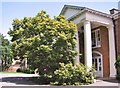
Mousehold House - entrance
For a full view and some information see > https://www.geograph.org.uk/photo/6195717.
Image: © Evelyn Simak
Taken: 29 Jun 2019
0.04 miles
10
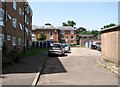
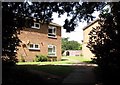
Flats and garages at William Mear Gardens
The large building in the background is Mousehold House > https://www.geograph.org.uk/photo/6195717.
The William Mear Gardens are named after the architect William Mear, who in 1820 designed the extensions of the adjacent Mousehold House > https://www.geograph.org.uk/photo/6195727.
Image: © Evelyn Simak
Taken: 29 Jun 2019
0.05 miles