
IMAGES TAKEN NEAR TO
Lackford Close, NORWICH, NR13 5NL
Introduction
This page details the photographs taken nearby to Lackford Close, NR13 5NL by members of the Geograph project.
The Geograph project started in 2005 with the aim of publishing, organising and preserving representative images for every square kilometre of Great Britain, Ireland and the Isle of Man.

There are currently over 7.5m images from over14,400 individuals and you can help contribute to the project by visiting https://www.geograph.org.uk
Image Map
Images are licensed for reuse under creativecommons.org/licenses/by-sa/2.0
Notes
- Clicking on the map will re-center to the selected point.
- The higher the marker number, the further away the image location is from the centre of the postcode.
Image Listing (60 Images Found)
Images are licensed for reuse under creativecommons.org/licenses/by-sa/2.0
Image
Details
Distance
1

The Memorial Hall, Brundall
The Hall has grown since I first remember it as a large wooden hut in the 1950s
Image: © Golda Conneely
Taken: 18 Jul 2005
0.06 miles
2
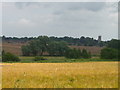
View across Run Dyke to Blofield
Taken from Brundall Memorial Hall looking North East across Marshland bordering Run Dyke between the villages
Image: © Golda Conneely
Taken: 16 Jul 2005
0.06 miles
3
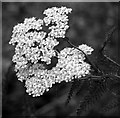
Yarrow (Achillea millefolium)
Yarrow is a very hardy plant that thrives in almost any soil. The colour of its flower heads can range from white to pink to yellow and the different colours can often be found side by side. The plant has been used since ancient times for healing wounds and its essential oil has anti-inflammatory properties. When taken internally it increases perspiration and works well for reducing fevers and easing colds. External application is beneficial for wounds, ulcers, and nosebleeds and it is believed to lower blood pressure and to relieve indigestion. Young leaves can be used for greens in salads and other dishes. Its Latin name is derived from the Greek hero Achilles who used the plant to heal his soldiers' wounds during the Trojan War; its use as a remedy for war wounds is reflected in many of its common names such as 'soldier's woundwort'. The common name 'yarrow' is derived from the Anglo-Saxon term 'gearwe' which is believed to mean 'to prepare' or 'to be ready'. Yarrow was also used as a ward against evil, and traditionally it was burned on the eve of St John's Day. Another use was to hang a bundle of yarrow over the doorway or over an infant's cradle on Midsummer's Eve to guarantee good health in the coming year. Druids and the ancient Chinese used it for divination purposes.
Image: © Evelyn Simak
Taken: 8 Jul 2017
0.08 miles
4
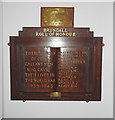
Second World War Memorial in the Memorial Hall
The memorial names twelve men who lost their lives in the Second World War.
It is in the lobby of the Memorial Hall and takes the form of an open book.
Image: © Adrian S Pye
Taken: 1 Nov 2019
0.10 miles
5
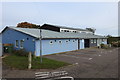
Brundall Memorial Hall, Brundall
The Memorial Hall is a big improvement on the old wooden army hut which stood on this site just after the Second World War. Inside is a plaque with the names of the fallen.
Image: © Adrian S Pye
Taken: 25 Oct 2019
0.10 miles
6
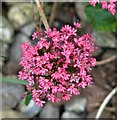
Red Valerian (Centranthus ruber)
Red Valerian is native to the Mediterranean and is reported to have been introduced to the UK before 1600. The colours of its flowers range from red, pink and white and a rare strain producing cream coloured flowers. The plant is fully naturalised and can be found growing in dry places, especially near the sea. It is also known as Jupiters Beard, Scarlet Lightning and Keys of Heaven.
Image: © Evelyn Simak
Taken: 8 Jul 2017
0.13 miles
7
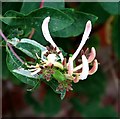
Honeysuckle (Lonicera periclymenum) - flower
Honeysuckle is a woody climber commonly found in woods and along hedges, where it twines itself around shrubs or trees and can reach a height of up to 6m, its interweaving stems helping to stay off the woodland floor. Honeysuckle is widespread throughout Britain and comprises many species, many introduced and naturalised. Honeysuckle flowers have one of the sweetest scents of all British wild flowers. The scent is strongest at night to attract pollinating moths.
Image: © Evelyn Simak
Taken: 8 Jul 2017
0.13 miles
8
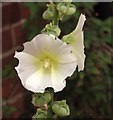
Hollyhock (Alcea rosea)
Hollyhocks are members of a genus of 60-odd species of flowering plants in the mallow family and native to Asia and Europe. The plant also has a long history of use in traditional medicine, reputedly for treating coughs and other problems of the respiratory organs. It is also said to be a helpful remedy for treating skin problems. Mainly the flowers are used.
Image: © Evelyn Simak
Taken: 8 Jul 2017
0.14 miles
9
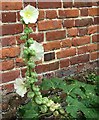
Hollyhock (Alcea rosea)
Hollyhocks are members of a genus of 60-odd species of flowering plants in the mallow family and native to Asia and Europe. The plant also has a long history of use in traditional medicine, reputedly for treating coughs and other problems of the respiratory organs. It is also said to be a helpful remedy for treating skin problems. Mainly the flowers are used.
Image: © Evelyn Simak
Taken: 8 Jul 2017
0.14 miles
10
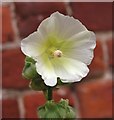
Hollyhock (Alcea rosea)
Hollyhocks are members of a genus of 60-odd species of flowering plants in the mallow family and native to Asia and Europe. The plant also has a long history of use in traditional medicine, reputedly for treating coughs and other problems of the respiratory organs. It is also said to be a helpful remedy for treating skin problems. Mainly the flowers are used.
Image: © Evelyn Simak
Taken: 8 Jul 2017
0.14 miles