
IMAGES TAKEN NEAR TO
Lincoln Terrace, COLWYN BAY, LL29 8DL
Introduction
This page details the photographs taken nearby to Lincoln Terrace, LL29 8DL by members of the Geograph project.
The Geograph project started in 2005 with the aim of publishing, organising and preserving representative images for every square kilometre of Great Britain, Ireland and the Isle of Man.

There are currently over 7.5m images from over14,400 individuals and you can help contribute to the project by visiting https://www.geograph.org.uk
Image Map
Images are licensed for reuse under creativecommons.org/licenses/by-sa/2.0
Notes
- Clicking on the map will re-center to the selected point.
- The higher the marker number, the further away the image location is from the centre of the postcode.
Image Listing (535 Images Found)
Images are licensed for reuse under creativecommons.org/licenses/by-sa/2.0
Image
Details
Distance
1
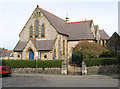
The Union Church
This building arose in 1885 from the schism between the Welsh and English Congregational causes which resulted in separate, new buildings. This is the English church and it was built upon the land originally held jointly. The name Union Church comes from the amalgamation with the English Baptists in 1946. This building is now used by the Independent Church Fellowship and has seen much renovation in recent years. The Welsh cause built and opened Capel Salem Image also in 1885.
Image: © Jonathan Wilkins
Taken: 17 Mar 2009
0.02 miles
2
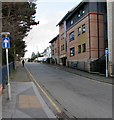
Bay View Road, Colwyn Bay
Viewed from the corner of Sea View Road.
Image: © Jaggery
Taken: 23 Feb 2016
0.02 miles
4
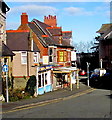
Sea View Road, Colwyn Bay
Descending from Abergele Road.
Image: © Jaggery
Taken: 23 Feb 2016
0.03 miles
5

Corner of Sea View Road and Bay View Road, Colwyn Bay
Flats on a corner 250 metres from the sand at the edge of the sea and the bay.
Image: © Jaggery
Taken: 23 Feb 2016
0.03 miles
6
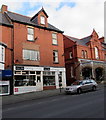
Magna Kitchens & Flooring, Colwyn Bay
Shop at 47 Abergele Road.
Image: © Jaggery
Taken: 23 Feb 2016
0.03 miles
7
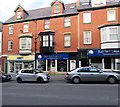
Bay Sea Lounge, Colwyn Bay
Indian cuisine takeaway at 43 Abergele Road.
Image: © Jaggery
Taken: 23 Feb 2016
0.03 miles
8
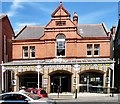
Theatr Colwyn
Work began on the Abergele Road building in 1885, by the newly formed Public Hall Company. The first group recorded as using the hall was the congregation of St Paul's Church, whose Iron Church had burnt down. Services were held at the hall until 1888. The venue was also used for a wide range of events including glittering military balls held by the Royal Welch Fusiliers, political rallies, shadowgraph shows, and illustrated lectures and, after 1901, plays direct from London's West End. The Public Hall also became the 'public' face of the world famous Congo Institute, based nearby. Reverend William Hughes, its founder, was also minister of the still standing Welsh Baptist Church, which is a few doors away.
The venue was taken over by the impresario and performer Harry Reynolds,
who had the Public Hall converted in 1909 into Colwyn Bay’s first 'picture house' with the installation of the electric light and a modern auditorium, after obtaining one of the first proper licences to screen moving pictures.
In 1922 the business was sold to Coastal Cinemas and the name was changed to The Rialto. It closed in 1930 and suffered fire damage, but after repairs reopened in 1936 as The New Rialto Repertory Theatre until 1951.
In 1959 the council bought the building and it became known as The Prince of Wales, with a new repertory company, London theatre manager, Geoffrey Hastings. In 1991, as part of a modernisation programme, the name of the venue changed again, this time to Theatr Colwyn.
http://colwynbayheritage.org.uk/history/history-test/
Theatr Colwyn is now the oldest operating cinema in the UK.
Funding totalling £50,000 from the North Wales Coast Regeneration Fund as part of the Bay Life+ Regeneration Programme and Arts Council of Wales to replace traditional 35mm film projection with the latest in Sony 4K digital film projection has made Theatr Colwyn the most technically advanced cinema in North Wales.
The theatre seats 329 people (including wheelchair spaces) and hosts a wide variety of performances ranging from dance and drama to rock music concerts, Welsh language shows and a very popular Christmas pantomime.
Theatre website: http://www.theatrcolwyn.co.uk/about
Image: © Gerald England
Taken: 10 Jul 2014
0.03 miles
9
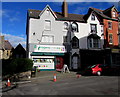
Rogers Jones & Co, Colwyn Bay
Auctioneers and valuers at 33 Abergele Road.
Image: © Jaggery
Taken: 23 Feb 2016
0.03 miles
10
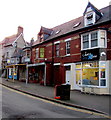
Jaap's Catch, Colwyn Bay
Traditional fish & chips shop at 48 Sea View Road.
Image: © Jaggery
Taken: 23 Feb 2016
0.03 miles