
IMAGES TAKEN NEAR TO
St. Peters Terrace, BURY ST. EDMUNDS, IP33 3DN
Introduction
This page details the photographs taken nearby to St. Peters Terrace, IP33 3DN by members of the Geograph project.
The Geograph project started in 2005 with the aim of publishing, organising and preserving representative images for every square kilometre of Great Britain, Ireland and the Isle of Man.

There are currently over 7.5m images from over14,400 individuals and you can help contribute to the project by visiting https://www.geograph.org.uk
Image Map
Images are licensed for reuse under creativecommons.org/licenses/by-sa/2.0
Notes
- Clicking on the map will re-center to the selected point.
- The higher the marker number, the further away the image location is from the centre of the postcode.
Image Listing (388 Images Found)
Images are licensed for reuse under creativecommons.org/licenses/by-sa/2.0
Image
Details
Distance
1
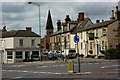
Road junction and the end of Hospital Road
There is an awkward double mini-roundabout, and it is just as well Hospital Road is closed to traffic at the eastern end. The Elephant and Castle pub is on the right and St Peter's Church tower can be seen.
Image: © Andrew Hill
Taken: 7 May 2009
0.01 miles
2
![Bury St Edmunds houses [324]](https://s1.geograph.org.uk/geophotos/06/70/30/6703081_87a369c2_120x120.jpg)
Bury St Edmunds houses [324]
Numbers 4 Hospital Road (nearest the camera) has an early 17th century core with a late 18th or early 19th century brick front. Part timber framed. Listed, grade II, with details at: https://historicengland.org.uk/listing/the-list/list-entry/1022557
Number 6 Hospital Road has an early 17th century core and additions in both the early and late 19th century. Timber framed and refronted in white brick in the early 19th century. Listed, grade II, with details at: https://historicengland.org.uk/listing/the-list/list-entry/1022558
Westgate Street is the southernmost street of the medieval grid and it is mainly about the Greene King Brewery with so many of the buildings constructed for its processes or for its employees. In addition to the brewery there is a rich mix of historic buildings in diverse materials, including white brick, red brick and stucco render. The street has the only surviving intact Regency theatre.
Bury St Edmunds is a market town which is the cultural and retail centre for West Suffolk and is known for brewing (Greene King) and sugar (British Sugar). There is scattered evidence of earlier activity but essentially Bury St Edmunds began as one of the royal boroughs of the Saxons and a monastery was founded which became the burial place of King Edmund. A new Benedictine abbey was built in 1020 which became rich and powerful and the town was laid out on a grid pattern by Abbot Baldwin. After the dissolution the abbey became ruinous. A new church, later the cathedral, was begun in the early 16th century.
Image: © Michael Dibb
Taken: 9 Sep 2020
0.01 miles
3
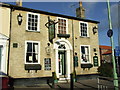
Elephant and castle
Elephant and castle public house Hospital road Bury St.Edmunds Suffolk.
Image: © Keith Evans
Taken: 12 Jan 2008
0.01 miles
4
![Bury St Edmunds buildings [259]](https://s0.geograph.org.uk/geophotos/06/70/35/6703588_5ca541cd_120x120.jpg)
Bury St Edmunds buildings [259]
Westgate Chapel is home to an evangelical church. The building was originally the stable block to a public house and has seen a number of uses before being purchased by the church in 1976.
Westgate Street is the southernmost street of the medieval grid and it is mainly about the Greene King Brewery with so many of the buildings constructed for its processes or for its employees. In addition to the brewery there is a rich mix of historic buildings in diverse materials, including white brick, red brick and stucco render. The street has the only surviving intact Regency theatre.
Bury St Edmunds is a market town which is the cultural and retail centre for West Suffolk and is known for brewing (Greene King) and sugar (British Sugar). There is scattered evidence of earlier activity but essentially Bury St Edmunds began as one of the royal boroughs of the Saxons and a monastery was founded which became the burial place of King Edmund. A new Benedictine abbey was built in 1020 which became rich and powerful and the town was laid out on a grid pattern by Abbot Baldwin. After the dissolution the abbey became ruinous. A new church, later the cathedral, was begun in the early 16th century.
Image: © Michael Dibb
Taken: 9 Sep 2020
0.01 miles
5
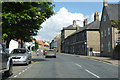
Out Westgate, Bury St Edmunds
The older houses on the right are grade II listed, the near terraced four houses, Albert Buildings, are dated 1840, the slightly lower and three storey houses beyond are of similar age.
Image: © Robin Webster
Taken: 3 Jun 2018
0.02 miles
6
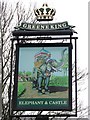
Elephant and castle pub sign
Elephant and castle pub sign Hospital road Bury St.Edmunds Suffolk.
Image: © Keith Evans
Taken: 1 Jan 2008
0.02 miles
7
![Bury St Edmunds houses [332]](https://s2.geograph.org.uk/geophotos/06/70/40/6704034_ecbc5ef1_120x120.jpg)
Bury St Edmunds houses [332]
Albert Buildings is a row of four houses, odd numbers 23 to 29 Out Westgate. Built in 1840 in white brick. Listed, grade II, with details at: https://historicengland.org.uk/listing/the-list/list-entry/1244873
Westgate Street is the southernmost street of the medieval grid and it is mainly about the Greene King Brewery with so many of the buildings constructed for its processes or for its employees. In addition to the brewery there is a rich mix of historic buildings in diverse materials, including white brick, red brick and stucco render. The street has the only surviving intact Regency theatre.
Bury St Edmunds is a market town which is the cultural and retail centre for West Suffolk and is known for brewing (Greene King) and sugar (British Sugar). There is scattered evidence of earlier activity but essentially Bury St Edmunds began as one of the royal boroughs of the Saxons and a monastery was founded which became the burial place of King Edmund. A new Benedictine abbey was built in 1020 which became rich and powerful and the town was laid out on a grid pattern by Abbot Baldwin. After the dissolution the abbey became ruinous. A new church, later the cathedral, was begun in the early 16th century.
Image: © Michael Dibb
Taken: 9 Sep 2020
0.02 miles
8
![Bury St Edmunds houses [331]](https://s1.geograph.org.uk/geophotos/06/70/40/6704033_142543da_120x120.jpg)
Bury St Edmunds houses [331]
Numbers 19 and 21 Out Westgate are a pair of mid 19th century houses in white brick. Both houses have a blocked window above the entrance door. Listed, grade II, with details at: https://historicengland.org.uk/listing/the-list/list-entry/1244869
Westgate Street is the southernmost street of the medieval grid and it is mainly about the Greene King Brewery with so many of the buildings constructed for its processes or for its employees. In addition to the brewery there is a rich mix of historic buildings in diverse materials, including white brick, red brick and stucco render. The street has the only surviving intact Regency theatre.
Bury St Edmunds is a market town which is the cultural and retail centre for West Suffolk and is known for brewing (Greene King) and sugar (British Sugar). There is scattered evidence of earlier activity but essentially Bury St Edmunds began as one of the royal boroughs of the Saxons and a monastery was founded which became the burial place of King Edmund. A new Benedictine abbey was built in 1020 which became rich and powerful and the town was laid out on a grid pattern by Abbot Baldwin. After the dissolution the abbey became ruinous. A new church, later the cathedral, was begun in the early 16th century.
Image: © Michael Dibb
Taken: 9 Sep 2020
0.03 miles
9
![Bury St Edmunds buildings [258]](https://s3.geograph.org.uk/geophotos/06/70/30/6703083_955be070_120x120.jpg)
Bury St Edmunds buildings [258]
Now a funeral parlour, this is the former Elephant and Castle public house which opened in the 1860s and closed in 2012. Built in the early 19th century in white brick with a later rear extension. Listed, grade II, with details at: https://historicengland.org.uk/listing/the-list/list-entry/1022556
Westgate Street is the southernmost street of the medieval grid and it is mainly about the Greene King Brewery with so many of the buildings constructed for its processes or for its employees. In addition to the brewery there is a rich mix of historic buildings in diverse materials, including white brick, red brick and stucco render. The street has the only surviving intact Regency theatre.
Bury St Edmunds is a market town which is the cultural and retail centre for West Suffolk and is known for brewing (Greene King) and sugar (British Sugar). There is scattered evidence of earlier activity but essentially Bury St Edmunds began as one of the royal boroughs of the Saxons and a monastery was founded which became the burial place of King Edmund. A new Benedictine abbey was built in 1020 which became rich and powerful and the town was laid out on a grid pattern by Abbot Baldwin. After the dissolution the abbey became ruinous. A new church, later the cathedral, was begun in the early 16th century.
Image: © Michael Dibb
Taken: 9 Sep 2020
0.03 miles
10
![Bury St Edmunds houses [329]](https://s2.geograph.org.uk/geophotos/06/70/40/6704026_516c71c5_120x120.jpg)
Bury St Edmunds houses [329]
Number 15 Out Westgate is early 19th century. Timber framed with stucco to the front and shingles and red brick to the gable. Listed, grade II, with details at: https://historicengland.org.uk/listing/the-list/list-entry/1244851
Westgate Street is the southernmost street of the medieval grid and it is mainly about the Greene King Brewery with so many of the buildings constructed for its processes or for its employees. In addition to the brewery there is a rich mix of historic buildings in diverse materials, including white brick, red brick and stucco render. The street has the only surviving intact Regency theatre.
Bury St Edmunds is a market town which is the cultural and retail centre for West Suffolk and is known for brewing (Greene King) and sugar (British Sugar). There is scattered evidence of earlier activity but essentially Bury St Edmunds began as one of the royal boroughs of the Saxons and a monastery was founded which became the burial place of King Edmund. A new Benedictine abbey was built in 1020 which became rich and powerful and the town was laid out on a grid pattern by Abbot Baldwin. After the dissolution the abbey became ruinous. A new church, later the cathedral, was begun in the early 16th century.
Image: © Michael Dibb
Taken: 9 Sep 2020
0.03 miles