
IMAGES TAKEN NEAR TO
The Vinefields, BURY ST. EDMUNDS, IP33 1YE
Introduction
This page details the photographs taken nearby to The Vinefields, IP33 1YE by members of the Geograph project.
The Geograph project started in 2005 with the aim of publishing, organising and preserving representative images for every square kilometre of Great Britain, Ireland and the Isle of Man.

There are currently over 7.5m images from over14,400 individuals and you can help contribute to the project by visiting https://www.geograph.org.uk
Image Map
Images are licensed for reuse under creativecommons.org/licenses/by-sa/2.0
Notes
- Clicking on the map will re-center to the selected point.
- The higher the marker number, the further away the image location is from the centre of the postcode.
Image Listing (202 Images Found)
Images are licensed for reuse under creativecommons.org/licenses/by-sa/2.0
Image
Details
Distance
1
![Bury St Edmunds houses [299]](https://s2.geograph.org.uk/geophotos/06/69/66/6696610_becb0377_120x120.jpg)
Bury St Edmunds houses [299]
This row of 6 cottages, number 1 to 6, The Vinefields, in flint and red brick is completely unaltered from 1834 when it was built. The Vinefields leads off Eastgate Street towards what once was the abbey vineyards. Listed, grade II, with details at: https://historicengland.org.uk/listing/the-list/list-entry/1038278
Until the second half of the 20th century, there were almost no buildings east of the River Lark except along Eastgate Street which has a number of 16th and 17th century houses. Now there are several large housing estates and a fairly large industrial estate.
Bury St Edmunds is a market town which is the cultural and retail centre for West Suffolk and is known for brewing (Greene King) and sugar (British Sugar). There is scattered evidence of earlier activity but essentially Bury St Edmunds began as one of the royal boroughs of the Saxons and a monastery was founded which became the burial place of King Edmund. A new Benedictine abbey was built in 1020 which became rich and powerful and the town was laid out on a grid pattern by Abbot Baldwin. After the dissolution the abbey became ruinous. A new church, later the cathedral, was begun in the early 16th century.
Image: © Michael Dibb
Taken: 8 Sep 2020
0.05 miles
2
![Bury St Edmunds houses [298]](https://s1.geograph.org.uk/geophotos/06/69/66/6696609_3f11c9c8_120x120.jpg)
Bury St Edmunds houses [298]
Eastgate House, number 118 Eastgate Street has a timber framed 17th century core with a 19th century white brick front. The house was greatly modernised in the 1980s and converted into sheltered accommodation at that time. Partly 2 storey and partly 3 storey set at right angles to the street. The plaque on the side reads 'Sir Thomas Hanmer, Speaker of the House of Commons, born 1677, died 1746'. Listed, grade II, with details at: https://historicengland.org.uk/listing/the-list/list-entry/1343602
Until the second half of the 20th century, there were almost no buildings east of the River Lark except along Eastgate Street which has a number of 16th and 17th century houses. Now there are several large housing estates and a fairly large industrial estate.
Bury St Edmunds is a market town which is the cultural and retail centre for West Suffolk and is known for brewing (Greene King) and sugar (British Sugar). There is scattered evidence of earlier activity but essentially Bury St Edmunds began as one of the royal boroughs of the Saxons and a monastery was founded which became the burial place of King Edmund. A new Benedictine abbey was built in 1020 which became rich and powerful and the town was laid out on a grid pattern by Abbot Baldwin. After the dissolution the abbey became ruinous. A new church, later the cathedral, was begun in the early 16th century.
Image: © Michael Dibb
Taken: 8 Sep 2020
0.05 miles
5
![Bury St Edmunds buildings [222]](https://s0.geograph.org.uk/geophotos/06/69/57/6695752_dd64964f_120x120.jpg)
Bury St Edmunds buildings [222]
This small shop premises at number 25 Eastgate Street is the surviving bay of a three bay house. Built in the early 17th century, timber framed and roughcast, jettied to the street. The boarded door leads to a passageway to the rear which has various 19th century extensions. The shop front in 19th century. Listed, grade II, with details at: https://historicengland.org.uk/listing/the-list/list-entry/1343593
Until the second half of the 20th century, there were almost no buildings east of the River Lark except along Eastgate Street which has a number of 16th and 17th century houses. Now there are several large housing estates and a fairly large industrial estate.
Bury St Edmunds is a market town which is the cultural and retail centre for West Suffolk and is known for brewing (Greene King) and sugar (British Sugar). There is scattered evidence of earlier activity but essentially Bury St Edmunds began as one of the royal boroughs of the Saxons and a monastery was founded which became the burial place of King Edmund. A new Benedictine abbey was built in 1020 which became rich and powerful and the town was laid out on a grid pattern by Abbot Baldwin. After the dissolution the abbey became ruinous. A new church, later the cathedral, was begun in the early 16th century.
Image: © Michael Dibb
Taken: 8 Sep 2020
0.07 miles
6
![Bury St Edmunds houses [89]](https://s1.geograph.org.uk/geophotos/06/69/57/6695753_40d606a5_120x120.jpg)
Bury St Edmunds houses [89]
Number 33 Eastgate Street was originally an extension to The Ancient House Image Built in the 16th century, timber framed and stuccoed with later rear extensions. Listed, grade II, with details at: https://historicengland.org.uk/listing/the-list/list-entry/1343594
Until the second half of the 20th century, there were almost no buildings east of the River Lark except along Eastgate Street which has a number of 16th and 17th century houses. Now there are several large housing estates and a fairly large industrial estate.
Bury St Edmunds is a market town which is the cultural and retail centre for West Suffolk and is known for brewing (Greene King) and sugar (British Sugar). There is scattered evidence of earlier activity but essentially Bury St Edmunds began as one of the royal boroughs of the Saxons and a monastery was founded which became the burial place of King Edmund. A new Benedictine abbey was built in 1020 which became rich and powerful and the town was laid out on a grid pattern by Abbot Baldwin. After the dissolution the abbey became ruinous. A new church, later the cathedral, was begun in the early 16th century.
Image: © Michael Dibb
Taken: 8 Sep 2020
0.07 miles
7
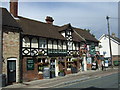
The Greyhound, Bury St Edmunds
On Eastgate Street.
Image: © JThomas
Taken: 14 Sep 2015
0.07 miles
8
![Bury St Edmunds houses [288]](https://s3.geograph.org.uk/geophotos/06/69/57/6695751_0e855481_120x120.jpg)
Bury St Edmunds houses [288]
Numbers 21 and 22 Eastgate Street were originally one house, now divided into two. Built in the early to mid 16th century, timber framed and jettied to the street. The first floor is stuccoed, the ground floor is in white brick. Listed, grade II, with details at: https://historicengland.org.uk/listing/the-list/list-entry/1343592
Until the second half of the 20th century, there were almost no buildings east of the River Lark except along Eastgate Street which has a number of 16th and 17th century houses. Now there are several large housing estates and a fairly large industrial estate.
Bury St Edmunds is a market town which is the cultural and retail centre for West Suffolk and is known for brewing (Greene King) and sugar (British Sugar). There is scattered evidence of earlier activity but essentially Bury St Edmunds began as one of the royal boroughs of the Saxons and a monastery was founded which became the burial place of King Edmund. A new Benedictine abbey was built in 1020 which became rich and powerful and the town was laid out on a grid pattern by Abbot Baldwin. After the dissolution the abbey became ruinous. A new church, later the cathedral, was begun in the early 16th century.
Image: © Michael Dibb
Taken: 8 Sep 2020
0.08 miles
9
![Bury St Edmunds houses [290]](https://s0.geograph.org.uk/geophotos/06/69/57/6695756_3dde6ca8_120x120.jpg)
Bury St Edmunds houses [290]
This magnificent house in Eastgate Street is now divided into two, The Ancient House, number 33A and Oak House, number 33B. Built on a corner site in a half-H form with a central range and two jettied and gabled cross wings. The central range was built up in the 18th century when the house was refronted. Some of the timber framing is exposed but the house is mostly stuccoed. The house was the home of King Edward VI Grammar School from 1550 to 1664. Listed, grade II*, with details at: https://historicengland.org.uk/listing/the-list/list-entry/1343595
Until the second half of the 20th century, there were almost no buildings east of the River Lark except along Eastgate Street which has a number of 16th and 17th century houses. Now there are several large housing estates and a fairly large industrial estate.
Bury St Edmunds is a market town which is the cultural and retail centre for West Suffolk and is known for brewing (Greene King) and sugar (British Sugar). There is scattered evidence of earlier activity but essentially Bury St Edmunds began as one of the royal boroughs of the Saxons and a monastery was founded which became the burial place of King Edmund. A new Benedictine abbey was built in 1020 which became rich and powerful and the town was laid out on a grid pattern by Abbot Baldwin. After the dissolution the abbey became ruinous. A new church, later the cathedral, was begun in the early 16th century.
Image: © Michael Dibb
Taken: 8 Sep 2020
0.08 miles
10
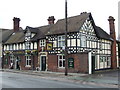
The Greyhound
The Greyhound public house Eastgate Street Bury St.Edmunds Suffolk.
Image: © Keith Evans
Taken: 9 Mar 2008
0.08 miles