
IMAGES TAKEN NEAR TO
Angel Hill, BURY ST. EDMUNDS, IP33 1LU
Introduction
This page details the photographs taken nearby to Angel Hill, IP33 1LU by members of the Geograph project.
The Geograph project started in 2005 with the aim of publishing, organising and preserving representative images for every square kilometre of Great Britain, Ireland and the Isle of Man.

There are currently over 7.5m images from over14,400 individuals and you can help contribute to the project by visiting https://www.geograph.org.uk
Image Map
Images are licensed for reuse under creativecommons.org/licenses/by-sa/2.0
Notes
- Clicking on the map will re-center to the selected point.
- The higher the marker number, the further away the image location is from the centre of the postcode.
Image Listing (2032 Images Found)
Images are licensed for reuse under creativecommons.org/licenses/by-sa/2.0
Image
Details
Distance
1
![Bury St Edmunds houses [1]](https://s3.geograph.org.uk/geophotos/06/64/73/6647395_11d11971_120x120.jpg)
Bury St Edmunds houses [1]
This large house, number 1 Angel Hill, has now a doctors' surgery on the ground floor with living accommodation above. Reconstructed in white brick in 1816 on an older site. Linked to a former stable block on Angel Lane. Many original internal features survive. Listed, grade II, with details at: https://historicengland.org.uk/listing/the-list/list-entry/1141151
Now used as a car park, Angel Hill the traditional market place was, until the 1870s, home to the famous Bury Fair. People from Europe and across the Far East came to buy and sell.
Bury St Edmunds is a market town which is the cultural and retail centre for West Suffolk and is known for brewing (Greene King) and sugar (British Sugar). There is scattered evidence of earlier activity but essentially Bury St Edmunds began as one of the royal boroughs of the Saxons and a monastery was founded which became the burial place of King Edmund. A new Benedictine abbey was built in 1020 which became rich and powerful and the town was laid out on a grid pattern by Abbot Baldwin. After the dissolution the abbey became ruinous. A new church, later the cathedral, was begun in the early 16th century.
Image: © Michael Dibb
Taken: 11 Sep 2020
0.00 miles
2
![Bury St Edmunds houses [2]](https://s3.geograph.org.uk/geophotos/06/64/74/6647411_deb93439_120x120.jpg)
Bury St Edmunds houses [2]
This large house at number 2 Angel Hill is now part of the Angel Hotel adjacent Image Built, in white brick, circa 1814 on the site of an earlier building. There are Greek elements in the design of the door surround and of the 1st floor railings. Some fine original features remain. Listed, grade II, with details at: https://historicengland.org.uk/listing/the-list/list-entry/1141152
Now used as a car park, Angel Hill the traditional market place was, until the 1870s, home to the famous Bury Fair. People from Europe and across the Far East came to buy and sell.
Bury St Edmunds is a market town which is the cultural and retail centre for West Suffolk and is known for brewing (Greene King) and sugar (British Sugar). There is scattered evidence of earlier activity but essentially Bury St Edmunds began as one of the royal boroughs of the Saxons and a monastery was founded which became the burial place of King Edmund. A new Benedictine abbey was built in 1020 which became rich and powerful and the town was laid out on a grid pattern by Abbot Baldwin. After the dissolution the abbey became ruinous. A new church, later the cathedral, was begun in the early 16th century.
Image: © Michael Dibb
Taken: 11 Sep 2020
0.01 miles
3
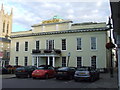
The Athenaeum
The Athenaeum Angel Hill Bury St.Edmunds
Image: © Keith Evans
Taken: 24 Jul 2007
0.01 miles
5
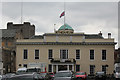
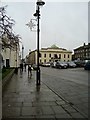
Athenaeum, Angel Hill, Bury Saint Edmunds
Grade I Listed 17th century house converted into an Assembly House in 1714. It was probably Sir Roger Martin of Long Melford who rebuilt the house as seen in various 18th century prints at which point it had three storeys and was known as the ‘New’ or ‘White House’. In 1713 Sir Roger Martin sold the property to John Eastland a dancing master who began to hold public assemblies there. The White House was then rebuilt with two storeys in 1789, by George Anderson who had purchased it in 1777. At this point, the building was known as the ‘New Assembly Rooms’. Anderson was bankrupt and sold it to James Oakes heading a consortium of 12 men in 1801. The 1804 alterations were financed (at a cost of £5000) by subscribers, which is why the building became known as the ‘New Subscription Rooms’ and in 1806 James Oakes conveyed it to the principal subscribers. The Athenaeum Literary Institute acquired the building in 1854. In 1935, the Athenaeum (library, reading room or institution for the promotion of literary or scientific learning) was acquired by the Bury St Edmunds Corporation. From the 1950s to the present day (2017) owned by St Edmundsbury Borough Council and managed in association with the Council’s catering partners, Sodexo Prestige, it is known for playing host to wedding receptions, balls, conferences, dinners and more.
Image: © Jo and Steve Turner
Taken: 22 Jun 2017
0.01 miles
6
![Bury St Edmunds buildings [50]](https://s0.geograph.org.uk/geophotos/06/65/09/6650904_b28607c4_120x120.jpg)
Bury St Edmunds buildings [50]
The iconic Athenaeum in Angel Hill was built in the 17th century as a large three storey house which was converted into an Assembly House in 1714. The building was remodelled in 1789 when it was reduced to two storeys. Much altered in 1805 when the present north front (seen here) was constructed and the ballroom added. The main internal feature is the ornate Georgian ballroom. Listed, with the attached railings, grade I, with details at: https://historicengland.org.uk/listing/the-list/list-entry/1376999
Now used as a car park, Angel Hill the traditional market place was, until the 1870s, home to the famous Bury Fair. People from Europe and across the Far East came to buy and sell.
Bury St Edmunds is a market town which is the cultural and retail centre for West Suffolk and is known for brewing (Greene King) and sugar (British Sugar). There is scattered evidence of earlier activity but essentially Bury St Edmunds began as one of the royal boroughs of the Saxons and a monastery was founded which became the burial place of King Edmund. A new Benedictine abbey was built in 1020 which became rich and powerful and the town was laid out on a grid pattern by Abbot Baldwin. After the dissolution the abbey became ruinous. A new church, later the cathedral, was begun in the early 16th century.
Image: © Michael Dibb
Taken: 11 Sep 2020
0.01 miles
7
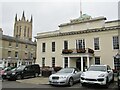
Bury St Edmunds - Athenaeum
"Built early in the 18th century as Assembly Rooms where people could play cards and attend balls".
www.athenaeumbse.co.uk
Image: © Colin Smith
Taken: 14 Aug 2020
0.01 miles
8
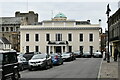
Bury St Edmunds, Angel Hill: The Athenaeum event venue
Image: © Michael Garlick
Taken: 4 Feb 2023
0.01 miles
9
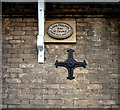
King Louis Philippe's wall plaque
There cannot be many places in the UK that have been the main residence of the monarch of another country, like this building next to the Angel Hotel on Bury's Angel Hill. In fact the tale of Louis Philippe and his Queen Amalie (spellings vary) is little known. The British Government paid them a retainer while Napoleon was in power, but it was the French people that put them in power in 1830. Philippe and Amalie operated as constitutional monarchs with an elected parliament but eventually in 1848 the French people decided they really didn't want a king, and the pair were sent into exile.
For no obvious reason they finished up in Bury St. Edmunds, where they made friends with the Marquess of Bristol. He lived at nearby Ickworth House, which still has a pair of vases carrying the couple's portraits. Later the couple moved south and stayed in the Marquess' Brighton house for a while.
Image: © John Goldsmith
Taken: 3 Mar 2012
0.01 miles
10
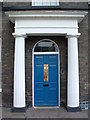
Blue Door
Entrance to a doctors surgery Angel Hill Bury St.Edmunds Suffolk. For detail of plaques see http://www.geograph.org.uk/photo/374975
Image: © Keith Evans
Taken: 25 Feb 2007
0.01 miles