
IMAGES TAKEN NEAR TO
Lower Baxter Street, BURY ST. EDMUNDS, IP33 1EF
Introduction
This page details the photographs taken nearby to Lower Baxter Street, IP33 1EF by members of the Geograph project.
The Geograph project started in 2005 with the aim of publishing, organising and preserving representative images for every square kilometre of Great Britain, Ireland and the Isle of Man.

There are currently over 7.5m images from over14,400 individuals and you can help contribute to the project by visiting https://www.geograph.org.uk
Image Map
Images are licensed for reuse under creativecommons.org/licenses/by-sa/2.0
Notes
- Clicking on the map will re-center to the selected point.
- The higher the marker number, the further away the image location is from the centre of the postcode.
Image Listing (2013 Images Found)
Images are licensed for reuse under creativecommons.org/licenses/by-sa/2.0
Image
Details
Distance
1
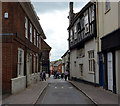
Lower Baxter Street
The narrowest part of the street looking south towards people crossing by on Abbeygate Street.
Image: © Andrew Hill
Taken: 7 May 2009
0.01 miles
2
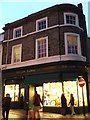
Lighting shop
Lighting shop Abbeygate Street Bury St.Edmunds Suffolk.
Image: © Keith Evans
Taken: 1 Dec 2007
0.02 miles
4
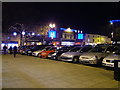
Christmas lights, town centre
Blue LEDs seem to be compulsory in 2008 Christmas decorations. Here Marks and Spencer is one of the businesses to use dull rectangular nets of them. But Starbucks and Thomas Cook do not seem to have made any effort at all.
Image: © John Goldsmith
Taken: 29 Dec 2008
0.02 miles
5
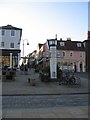
Looking towards Abbeygate Street
Image: © Mr Ignavy
Taken: 27 Oct 2008
0.02 miles
6
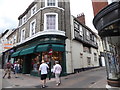
Junction of Abbeygate and Lower Baxter Streets
Image: © Basher Eyre
Taken: 31 Jul 2016
0.03 miles
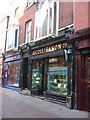
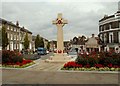
9
![Bury St Edmunds buildings [40]](https://s0.geograph.org.uk/geophotos/06/64/81/6648144_44e6dd3a_120x120.jpg)
Bury St Edmunds buildings [40]
Number 7 Angel Hill, was built in the 1930s to house the Borough Council's offices which it did until the council moved in 2009. Now part of the building is used as commercial offices, part has been converted to residential. The style is early 18th century Palladian.
Now used as a car park, Angel Hill the traditional market place was, until the 1870s, home to the famous Bury Fair. People from Europe and across the Far East came to buy and sell.
Bury St Edmunds is a market town which is the cultural and retail centre for West Suffolk and is known for brewing (Greene King) and sugar (British Sugar). There is scattered evidence of earlier activity but essentially Bury St Edmunds began as one of the royal boroughs of the Saxons and a monastery was founded which became the burial place of King Edmund. A new Benedictine abbey was built in 1020 which became rich and powerful and the town was laid out on a grid pattern by Abbot Baldwin. After the dissolution the abbey became ruinous. A new church, later the cathedral, was begun in the early 16th century.
Image: © Michael Dibb
Taken: 11 Sep 2020
0.03 miles
10
![Bury St Edmunds buildings [13]](https://s3.geograph.org.uk/geophotos/06/64/44/6644491_096d8d81_120x120.jpg)
Bury St Edmunds buildings [13]
Number 21 Abbeygate Street, originally a house and shop is now a shop with storage above. Built in the early 19th century, timber framed and roughcast with a later large 'L' shaped rear extension. The shop front is late 20th century. Listed, for group value, grade II, with details at: https://historicengland.org.uk/listing/the-list/list-entry/1328861
Abbeygate Street is the principal shopping street of the town.
Bury St Edmunds is a market town which is the cultural and retail centre for West Suffolk and is known for brewing (Greene King) and sugar (British Sugar). There is scattered evidence of earlier activity but essentially Bury St Edmunds began as one of the royal boroughs of the Saxons and a monastery was founded which became the burial place of King Edmund. A new Benedictine abbey was built in 1020 which became rich and powerful and the town was laid out on a grid pattern by Abbot Baldwin. After the dissolution the abbey became ruinous. A new church, later the cathedral, was begun in the early 16th century.
Image: © Michael Dibb
Taken: 13 Sep 2020
0.03 miles