
IMAGES TAKEN NEAR TO
Buttermarket, BURY ST. EDMUNDS, IP33 1DW
Introduction
This page details the photographs taken nearby to Buttermarket, IP33 1DW by members of the Geograph project.
The Geograph project started in 2005 with the aim of publishing, organising and preserving representative images for every square kilometre of Great Britain, Ireland and the Isle of Man.

There are currently over 7.5m images from over14,400 individuals and you can help contribute to the project by visiting https://www.geograph.org.uk
Image Map
Images are licensed for reuse under creativecommons.org/licenses/by-sa/2.0
Notes
- Clicking on the map will re-center to the selected point.
- The higher the marker number, the further away the image location is from the centre of the postcode.
Image Listing (1719 Images Found)
Images are licensed for reuse under creativecommons.org/licenses/by-sa/2.0
Image
Details
Distance
3
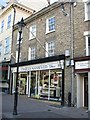
Charles Mansfield - Glass shop
The Traverse.
Image: © Mr Ignavy
Taken: 27 Oct 2008
0.01 miles
4
![Bury St Edmunds buildings [112]](https://s1.geograph.org.uk/geophotos/06/66/61/6666165_fc44d9d2_120x120.jpg)
Bury St Edmunds buildings [112]
Numbers 30 and 31 (seen here) and number 32 Buttermarket Image are a row of three shops with storage above, built in two phases, in brick in the early 19th century. The shop fronts are 20th century. The row occupies part of a site where four buildings were damaged by incendiary bombs dropped during a Zeppelin raid in 1915.
Cornhill, Buttermarket and The Traverse are the commercial heart of the town. Cornhill incorporates the market areas set out in the 12th century where twice weekly markets are held, Buttermarket with The Traverse extend to the south connecting with Abbeygate Street and Guildhall Street. The area has some of the town’s finest and most important buildings.
Bury St Edmunds is a market town which is the cultural and retail centre for West Suffolk and is known for brewing (Greene King) and sugar (British Sugar). There is scattered evidence of earlier activity but essentially Bury St Edmunds began as one of the royal boroughs of the Saxons and a monastery was founded which became the burial place of King Edmund. A new Benedictine abbey was built in 1020 which became rich and powerful and the town was laid out on a grid pattern by Abbot Baldwin. After the dissolution the abbey became ruinous. A new church, later the cathedral, was begun in the early 16th century.
Image: © Michael Dibb
Taken: 14 Sep 2020
0.01 miles
6
![Bury St Edmunds buildings [111]](https://s0.geograph.org.uk/geophotos/06/66/61/6666152_5ccae0ea_120x120.jpg)
Bury St Edmunds buildings [111]
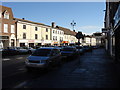
Number 28 and 29 Buttermarket were built in 1925 as The Play-house cinema and theatre with seating for 700. It remained as a theatre until the late 1950s when it was converted to retail use.
Cornhill, Buttermarket and The Traverse are the commercial heart of the town. Cornhill incorporates the market areas set out in the 12th century where twice weekly markets are held, Buttermarket with The Traverse extend to the south connecting with Abbeygate Street and Guildhall Street. The area has some of the town’s finest and most important buildings.
Bury St Edmunds is a market town which is the cultural and retail centre for West Suffolk and is known for brewing (Greene King) and sugar (British Sugar). There is scattered evidence of earlier activity but essentially Bury St Edmunds began as one of the royal boroughs of the Saxons and a monastery was founded which became the burial place of King Edmund. A new Benedictine abbey was built in 1020 which became rich and powerful and the town was laid out on a grid pattern by Abbot Baldwin. After the dissolution the abbey became ruinous. A new church, later the cathedral, was begun in the early 16th century.
Image: © Michael Dibb
Taken: 14 Sep 2020
0.01 miles
7
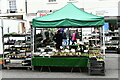
Bury St Edmunds, Saturday Market Day: Stall 4
Image: © Michael Garlick
Taken: 4 Feb 2023
0.01 miles
8
![Bury St Edmunds buildings [113]](https://s0.geograph.org.uk/geophotos/06/66/61/6666176_394da7d3_120x120.jpg)
Bury St Edmunds buildings [113]
Number 32 (seen here) and numbers 30 and 31 Buttermarket Image are a row of three shops with storage above, built in two phases, in brick, in the early 19th century. The shop fronts are 20th century. The row occupies part of a site where four buildings were damaged by incendiary bombs dropped during a Zeppelin raid in 1915.
Cornhill, Buttermarket and The Traverse are the commercial heart of the town. Cornhill incorporates the market areas set out in the 12th century where twice weekly markets are held, Buttermarket with The Traverse extend to the south connecting with Abbeygate Street and Guildhall Street. The area has some of the town’s finest and most important buildings.
Bury St Edmunds is a market town which is the cultural and retail centre for West Suffolk and is known for brewing (Greene King) and sugar (British Sugar). There is scattered evidence of earlier activity but essentially Bury St Edmunds began as one of the royal boroughs of the Saxons and a monastery was founded which became the burial place of King Edmund. A new Benedictine abbey was built in 1020 which became rich and powerful and the town was laid out on a grid pattern by Abbot Baldwin. After the dissolution the abbey became ruinous. A new church, later the cathedral, was begun in the early 16th century.
Image: © Michael Dibb
Taken: 14 Sep 2020
0.02 miles
9
![Bury St Edmunds buildings [110]](https://s0.geograph.org.uk/geophotos/06/66/61/6666148_b3c5a4a7_120x120.jpg)
Bury St Edmunds buildings [110]
Numbers 27, 27A and 27B Buttermarket were originally one house, now divided into two shops with storage above. Built in the 16th or 17th century, timber framed and stuccoed, refronted in the early 19th century with two 20th century shop fronts. A long timber framed and jettied 18th century rear extension, at right angles to the front and approached from High Baxter Street, was formerly the Half Moon Inn which closed in the 1870s. Listed, grade II, with details at: https://historicengland.org.uk/listing/the-list/list-entry/1031143
Cornhill, Buttermarket and The Traverse are the commercial heart of the town. Cornhill incorporates the market areas set out in the 12th century where twice weekly markets are held, Buttermarket with The Traverse extend to the south connecting with Abbeygate Street and Guildhall Street. The area has some of the town’s finest and most important buildings.
Bury St Edmunds is a market town which is the cultural and retail centre for West Suffolk and is known for brewing (Greene King) and sugar (British Sugar). There is scattered evidence of earlier activity but essentially Bury St Edmunds began as one of the royal boroughs of the Saxons and a monastery was founded which became the burial place of King Edmund. A new Benedictine abbey was built in 1020 which became rich and powerful and the town was laid out on a grid pattern by Abbot Baldwin. After the dissolution the abbey became ruinous. A new church, later the cathedral, was begun in the early 16th century.
Image: © Michael Dibb
Taken: 14 Sep 2020
0.02 miles
10
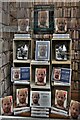
Bury St Edmunds, Butter Market: A whole window display devoted to 'Spare'
Image: © Michael Garlick
Taken: 4 Feb 2023
0.02 miles