
IMAGES TAKEN NEAR TO
Langton Place, CHELTENHAM, GL53 8HW
Introduction
This page details the photographs taken nearby to Langton Place, GL53 8HW by members of the Geograph project.
The Geograph project started in 2005 with the aim of publishing, organising and preserving representative images for every square kilometre of Great Britain, Ireland and the Isle of Man.

There are currently over 7.5m images from over14,400 individuals and you can help contribute to the project by visiting https://www.geograph.org.uk
Image Map
Images are licensed for reuse under creativecommons.org/licenses/by-sa/2.0
Notes
- Clicking on the map will re-center to the selected point.
- The higher the marker number, the further away the image location is from the centre of the postcode.
Image Listing (127 Images Found)
Images are licensed for reuse under creativecommons.org/licenses/by-sa/2.0
Image
Details
Distance
1
![Cheltenham features [22]](https://s0.geograph.org.uk/geophotos/06/54/11/6541124_077b822b_120x120.jpg)
Cheltenham features [22]
The railings show where Cudnall Bridge carries Cirencester Road over the River Chelt. The bridge is thought to have been built circa 1789 with the railings and parapet added in 1827 when Cirencester Road was cut. See also Image and Image Listed, grade II, with details at: https://historicengland.org.uk/listing/the-list/list-entry/1386598
Cheltenham is located at the foot of the Cotswold scarp with the small River Chelt flowing through the town. After the discovery of mineral springs in 1716 Cheltenham became a spa town and many Regency houses and other buildings were erected. The town is home to the renowned Cheltenham Festival, four days of horse jump racing culminating in the Gold Cup, held annually in March at the nearby racecourse.
Image: © Michael Dibb
Taken: 6 May 2020
0.02 miles
2
![Cheltenham features [21]](https://s3.geograph.org.uk/geophotos/06/54/11/6541119_ba3cbfff_120x120.jpg)
Cheltenham features [21]
This is Cirencester Road which was cut in 1827. The railings show where Cudnall Bridge carries the road over the River Chelt. The bridge is thought to have been built circa 1789 with the railings and parapet added in 1827. See also Image and Image Listed, grade II, with details at: https://historicengland.org.uk/listing/the-list/list-entry/1386598
Cheltenham is located at the foot of the Cotswold scarp with the small River Chelt flowing through the town. After the discovery of mineral springs in 1716 Cheltenham became a spa town and many Regency houses and other buildings were erected. The town is home to the renowned Cheltenham Festival, four days of horse jump racing culminating in the Gold Cup, held annually in March at the nearby racecourse.
Image: © Michael Dibb
Taken: 6 May 2020
0.03 miles
3
![Cheltenham features [20]](https://s0.geograph.org.uk/geophotos/06/54/11/6541116_1ada9e83_120x120.jpg)
Cheltenham features [20]
Seen from the footbridge and just visible through the foliage is Cudnall Bridge which carries Cirencester Road over the River Chelt. The bridge is circa 1789 with the railings and parapet added in 1827 when Cirencester Road was cut. See also Image and Image Listed, grade II, with details at: https://historicengland.org.uk/listing/the-list/list-entry/1386598
Cheltenham is located at the foot of the Cotswold scarp with the small River Chelt flowing through the town. After the discovery of mineral springs in 1716 Cheltenham became a spa town and many Regency houses and other buildings were erected. The town is home to the renowned Cheltenham Festival, four days of horse jump racing culminating in the Gold Cup, held annually in March at the nearby racecourse.
Image: © Michael Dibb
Taken: 6 May 2020
0.03 miles
4
![Cheltenham houses [81]](https://s0.geograph.org.uk/geophotos/06/54/26/6542672_04c17baf_120x120.jpg)
Cheltenham houses [81]
Seen down the driveway past the skewed gable end of Milford Cottage Image is Ivy Cottage, number 8 Cudnall Street. The house was built in 1808, with later additions and alterations including wing to left. Originally known as Cowell House. Listed, grade II, with details at: https://historicengland.org.uk/listing/the-list/list-entry/1386606
Cheltenham is located at the foot of the Cotswold scarp with the small River Chelt flowing through the town. After the discovery of mineral springs in 1716 Cheltenham became a spa town and many Regency houses and other buildings were erected. The town is home to the renowned Cheltenham Festival, four days of horse jump racing culminating in the Gold Cup, held annually in March at the nearby racecourse.
Image: © Michael Dibb
Taken: 6 May 2020
0.04 miles
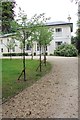
6
![Cheltenham houses [72]](https://s1.geograph.org.uk/geophotos/06/54/26/6542653_e3a68a0e_120x120.jpg)
Cheltenham houses [72]
Langton Lodge, number 2 Cudnall Street, was built in 1808 and restored in 1987. The house was originally called Charlotteville. There are some fine original internal features. Listed, grade II, with details at: https://historicengland.org.uk/listing/the-list/list-entry/1386601
Cheltenham is located at the foot of the Cotswold scarp with the small River Chelt flowing through the town. After the discovery of mineral springs in 1716 Cheltenham became a spa town and many Regency houses and other buildings were erected. The town is home to the renowned Cheltenham Festival, four days of horse jump racing culminating in the Gold Cup, held annually in March at the nearby racecourse.
Image: © Michael Dibb
Taken: 6 May 2020
0.04 miles
7
![Cheltenham features [19]](https://s0.geograph.org.uk/geophotos/06/54/11/6541108_811646b4_120x120.jpg)
Cheltenham features [19]
A Cheltenham and District Gas Company syphon sign on a footbridge over the River Chelt.
Cheltenham is located at the foot of the Cotswold scarp with the small River Chelt flowing through the town. After the discovery of mineral springs in 1716 Cheltenham became a spa town and many Regency houses and other buildings were erected. The town is home to the renowned Cheltenham Festival, four days of horse jump racing culminating in the Gold Cup, held annually in March at the nearby racecourse.
Image: © Michael Dibb
Taken: 6 May 2020
0.04 miles
8
![Cheltenham buildings [59]](https://s2.geograph.org.uk/geophotos/06/54/10/6541098_be98cf8a_120x120.jpg)
Cheltenham buildings [59]
The ugly 20th century block is attached to the original Charlton House (see Image) which was built in 1810 as a house for the Higgs family. The site serves as the head office of the Spirax Sarco company. Listed, grade II, with details at: https://historicengland.org.uk/listing/the-list/list-entry/1386561
Cheltenham is located at the foot of the Cotswold scarp with the small River Chelt flowing through the town. After the discovery of mineral springs in 1716 Cheltenham became a spa town and many Regency houses and other buildings were erected. The town is home to the renowned Cheltenham Festival, four days of horse jump racing culminating in the Gold Cup, held annually in March at the nearby racecourse.
Image: © Michael Dibb
Taken: 6 May 2020
0.05 miles
9
![Cheltenham houses [75]](https://s0.geograph.org.uk/geophotos/06/54/26/6542656_ede0f9fa_120x120.jpg)
Cheltenham houses [75]
Abbotsdene, number 6 Cudnall Street, was built circa 1806 in rendered brick with iron balconies and railings. The house and railings are listed, grade II, with details at: https://historicengland.org.uk/listing/the-list/list-entry/1386605
Cheltenham is located at the foot of the Cotswold scarp with the small River Chelt flowing through the town. After the discovery of mineral springs in 1716 Cheltenham became a spa town and many Regency houses and other buildings were erected. The town is home to the renowned Cheltenham Festival, four days of horse jump racing culminating in the Gold Cup, held annually in March at the nearby racecourse.
Image: © Michael Dibb
Taken: 6 May 2020
0.05 miles
10
![Cheltenham houses [89]](https://s2.geograph.org.uk/geophotos/06/54/38/6543814_abb4d56a_120x120.jpg)
Cheltenham houses [89]
This pair of houses numbers 30 and 32 Brookway Road were built circa 1830 and have tent roofed iron porches. Formerly known as numbers 1 and 2 Brook Villas. Listed, grade II, with details at: https://historicengland.org.uk/listing/the-list/list-entry/1386554
Cheltenham is located at the foot of the Cotswold scarp with the small River Chelt flowing through the town. After the discovery of mineral springs in 1716 Cheltenham became a spa town and many Regency houses and other buildings were erected. The town is home to the renowned Cheltenham Festival, four days of horse jump racing culminating in the Gold Cup, held annually in March at the nearby racecourse.
Image: © Michael Dibb
Taken: 6 May 2020
0.05 miles