
IMAGES TAKEN NEAR TO
Barkers Leys, CHELTENHAM, GL52 8BQ
Introduction
This page details the photographs taken nearby to Barkers Leys, GL52 8BQ by members of the Geograph project.
The Geograph project started in 2005 with the aim of publishing, organising and preserving representative images for every square kilometre of Great Britain, Ireland and the Isle of Man.

There are currently over 7.5m images from over14,400 individuals and you can help contribute to the project by visiting https://www.geograph.org.uk
Image Map
Images are licensed for reuse under creativecommons.org/licenses/by-sa/2.0
Notes
- Clicking on the map will re-center to the selected point.
- The higher the marker number, the further away the image location is from the centre of the postcode.
Image Listing (59 Images Found)
Images are licensed for reuse under creativecommons.org/licenses/by-sa/2.0
Image
Details
Distance
1
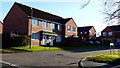
Cares Close
Housing on the northern edge of Bishop's Cleeve.
Image: © Jonathan Billinger
Taken: 17 Dec 2013
0.05 miles
2

Millham Road, Bishop's Cleeve
Suburban road in this dormitary village at the foot of Nottingham Hill.
Image: © Jonathan Billinger
Taken: 17 Dec 2013
0.05 miles
3
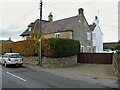
Bishop's Cleeve houses [19]
Owls End, number 87 Station Road, is a large house built in the late C17 or early 18th century with later additions. The plan is 'L' shaped with a timber framed cross wing. Constructed partly of square-panelled timber framing with brick noggin, and partly of coursed limestone rubble stone, under roofs partly of artificial stone slate and partly of tile. Listed, grade II, with details at: https://historicengland.org.uk/listing/the-list/list-entry/1091702
Bishop's Cleeve is a large village in Gloucestershire. It lies at the foot of Cleeve Hill, the highest point of the Cotswolds, some 3½ miles north of Cheltenham. Although Iron Age and Roman remains have been found locally, the earliest known origins of the village date to the 8th Century. A monastery and surrounding land was given to the Bishop of Worcester, and the village became the Bishop’s Cliffe. The village grew rapidly when an aerospace factory was built nearby after the Second World War and continues to grow.
Image: © Michael Dibb
Taken: 9 Nov 2021
0.05 miles
4
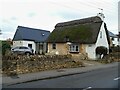
Bishop's Cleeve houses [20]
Rose Cottage, number 89 Station Road, was built in the early 18th century with a later extension, which, although unsympathetic, is only linked to the original building. Built gable end to the street. Constructed of square-panelled timber framing with painted brick, and painted rubble stone and brick, and rendered infill, all under a thatch roof. Listed, grade II, with details at: https://historicengland.org.uk/listing/the-list/list-entry/1154387
Bishop's Cleeve is a large village in Gloucestershire. It lies at the foot of Cleeve Hill, the highest point of the Cotswolds, some 3½ miles north of Cheltenham. Although Iron Age and Roman remains have been found locally, the earliest known origins of the village date to the 8th Century. A monastery and surrounding land was given to the Bishop of Worcester, and the village became the Bishop’s Cliffe. The village grew rapidly when an aerospace factory was built nearby after the Second World War and continues to grow.
Image: © Michael Dibb
Taken: 9 Nov 2021
0.05 miles
5
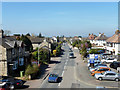
Station Road, Bishop's Cleeve
There is no station now, although the railway has been resurrected as the Gloucestershire Warwickshire Railway.
Image: © Robin Webster
Taken: 6 Apr 2015
0.07 miles
6
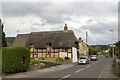
Jasmine Cottage
Cottage. C17. Square-panelled timber framing with limestone rubble and unpainted brick infill, on a limestone rubble plinth; gable end facing road limestone rubble and weatherboarded gable; thatched roof with decorative ridge thatching; red brick stack.
Image: © P Gaskell
Taken: Unknown
0.08 miles
7
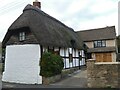
Bishop's Cleeve houses [18]
Number 79 Station Road is a 17th century cottage with a later, unsympathetic extension. Constructed of square-panelled timber framing with rubble and brick noggin, set on a rubble stone plinth with the gable end to the street in rubble stone and weatherboarded, all under a thatch roof. There is another view of the cottage at Image Listed, grade II, with details at: https://historicengland.org.uk/listing/the-list/list-entry/1091701
Bishop's Cleeve is a large village in Gloucestershire. It lies at the foot of Cleeve Hill, the highest point of the Cotswolds, some 3½ miles north of Cheltenham. Although Iron Age and Roman remains have been found locally, the earliest known origins of the village date to the 8th Century. A monastery and surrounding land was given to the Bishop of Worcester, and the village became the Bishop’s Cliffe. The village grew rapidly when an aerospace factory was built nearby after the Second World War and continues to grow.
Image: © Michael Dibb
Taken: 9 Nov 2021
0.08 miles
8
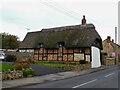
Bishop's Cleeve houses [17]
Number 79 Station Road is a 17th century cottage with a later, unsympathetic extension. Constructed of square-panelled timber framing with rubble and brick noggin, set on a rubble stone plinth with the gable end to the street in rubble stone and weatherboarded, all under a thatch roof. There is another view of the cottage at Image Listed, grade II, with details at: https://historicengland.org.uk/listing/the-list/list-entry/1091701
Bishop's Cleeve is a large village in Gloucestershire. It lies at the foot of Cleeve Hill, the highest point of the Cotswolds, some 3½ miles north of Cheltenham. Although Iron Age and Roman remains have been found locally, the earliest known origins of the village date to the 8th Century. A monastery and surrounding land was given to the Bishop of Worcester, and the village became the Bishop’s Cliffe. The village grew rapidly when an aerospace factory was built nearby after the Second World War and continues to grow.
Image: © Michael Dibb
Taken: 9 Nov 2021
0.08 miles
10
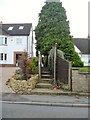
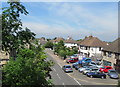
Bishop's Cleeve features [2]
From Station Road, this footpath leads to Priory Lane.
Bishop's Cleeve is a large village in Gloucestershire. It lies at the foot of Cleeve Hill, the highest point of the Cotswolds, some 3½ miles north of Cheltenham. Although Iron Age and Roman remains have been found locally, the earliest known origins of the village date to the 8th Century. A monastery and surrounding land was given to the Bishop of Worcester, and the village became the Bishop’s Cliffe. The village grew rapidly when an aerospace factory was built nearby after the Second World War and continues to grow.
Image: © Michael Dibb
Taken: 9 Nov 2021
0.09 miles