
IMAGES TAKEN NEAR TO
Station Avenue, HADDINGTON, EH41 4EG
Introduction
This page details the photographs taken nearby to Station Avenue, EH41 4EG by members of the Geograph project.
The Geograph project started in 2005 with the aim of publishing, organising and preserving representative images for every square kilometre of Great Britain, Ireland and the Isle of Man.

There are currently over 7.5m images from over14,400 individuals and you can help contribute to the project by visiting https://www.geograph.org.uk
Image Map
Images are licensed for reuse under creativecommons.org/licenses/by-sa/2.0
Notes
- Clicking on the map will re-center to the selected point.
- The higher the marker number, the further away the image location is from the centre of the postcode.
Image Listing (60 Images Found)
Images are licensed for reuse under creativecommons.org/licenses/by-sa/2.0
Image
Details
Distance
1
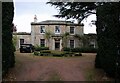
Maryville, Station Road, Haddington
Late 18th or early 19th century villa. It is category B listed https://portal.historicenvironment.scot/designation/LB34460.
Image: © Richard Sutcliffe
Taken: 28 Sep 2023
0.07 miles
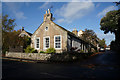
3
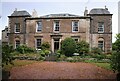
Bellevue, Station Road, Haddington
Early 19th Century, Category B listed https://portal.historicenvironment.scot/designation/LB34461 house.
Image: © Richard Sutcliffe
Taken: 28 Sep 2023
0.08 miles
4
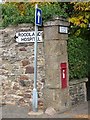
Old sign, Haddington
With a Victorian postbox nearby.
Image: © Richard Webb
Taken: 7 Oct 2013
0.08 miles
5

Parkside Cottages
Two 18th century cottages with extension on Station Road, Haddington. They are together Category B listed https://portal.historicenvironment.scot/designation/LB34458.
Image: © Richard Sutcliffe
Taken: 28 Sep 2023
0.09 miles
6

John Knox statue, Knox Place
Statue of Scotland's leading reformer at the time of the Protestant Reformation. http://en.wikipedia.org/wiki/John_Knox Haddington is traditionally accepted as his birthplace, linked to a house in the Giffordgate, although for some the nearby village of Gifford has a rival claim.
"No grander figure can be found, in the entire history of the Reformation in this island, than that of Knox. (...) The time has come when English history may do justice to one but for whom the Reformation would have been overthrown among ourselves; for the spirit which Knox created saved Scotland; and if Scotland had been Catholic again, neither the wisdom of Elizabeth's Ministers, nor the teaching of her Bishops, nor her own chicaneries, would have preserved England from revolution. His was the voice which taught the peasant of the Lothians that he was a free man, the equal in the sight of God with the proudest peer or prelate that had trampled on his forefathers. He was the one antagonist whom Mary Stuart could not soften nor Maitland [her Secretary] deceive; he it was that raised the poor Commons of his country into a stern and rugged people, who might be hard, narrow, superstitious and fanatical, but who, nevertheless, were men whom neither king, noble, nor priest could force again to submit to tyranny." -- a Victorian view of Knox from Froude's History Of England, 1850-70
Image: © kim traynor
Taken: 13 Apr 2011
0.09 miles
7

John Knox statue, Knox Place
The character of Knox, his Protestant Reformation and the mindset of the later Covenanters can be understood from his own account of a dialogue with Queen Mary at Holyroodhouse.
Queen: Bot yet ye have teachit the Pepill to receave ane uther Religioun, then thair Princes can allow: And how can that Doctrine be of God? Seing, that God comands Subjectis to obey thair Princes.
Knox: Madame, as that rycht Religioun toke nether Originall nor Authority from wardly Princes, bot from the eternall God alone: So ar not Subjects bund to frame thair Religioun, according to the Appetyte of thair Princes; for oft it is, that Princes ar the most ignarant of all uthers in God's trew Religioun, as we may read als weill in the Histories before the Deith of Christ Jesus, as efter. If all the Seid [seed] of Abraham, sould have bene of the Religioun of Pharao, to quhom they were long Subjects, I pray yow, Madame, quhat Religioun sould thare have bene in the Warld? For, if all Men, in the Days of the Apostles, sould have bene of the Religioun of the Romane Emperours, quhat Religioun sould have bene on the Face of the Eirth? Daniell and his Fellowes wer Subjects to Nebuchadnezar, and unto Darius, and yit, Madame, they wald not be of thair Religioun, neyther of the ane or the uther. For the thre Children said, We mak it knawn unto the, O King, that we will not worschipe thy Gods. And Daniell did pray publictly unto his God, against the expres Comandement of the King. And so, Madame, ye may perceave, that Subjects ar not bund to the Religioun of thair Princes, albeit they ar comandit to give thame Obedience.
Queen: Yea, nane of thois Men raysed the Sword against thair Princes.
Knox: Yit, Madame, ye cannot deny bot that they resisted: For these that obey not the Comandemants that ar gevin, in sum Sort they resist.
Queen: Bot yit, they resisted not be the Sword.
Knox: God, Madam, had not given unto thame the Power and the Meanes.
Queen: Think ye that Subjects having Power may resist thair Princes?
Knox: If thair Princes excede thair Bundes, Madame, and do against that quharefore they suld be obeyed, it is no doubt, bot they may be resisted even by Power. For thare is nether gritter Honour, nor gritter Obedience to be given to Kings and Princes, then God hes comandit to be gevin to Father and Mother: Bot so it is, that the Father may be stricken with a Phrenesie [frenzy] in the quhilk he wald slay his awn Children. Now, Madame, if the Children aryse, joyne thameselfis togidder, apprehend the Father, tak the Sword and uther Weapons from him; and finally bind his Hands, and kepe him in Prisoun, till that his Frenesie be overpast; think ye, Madame, that the Children do ony Wrang? Or think ye, Madame, that God will be offendit with thame, that have stayed thair Father to comit Wickednes? It is even so, Madame, with Princes that wald murther the Children of God, that ar Subjects unto thame. Thair blind Zeall is nathing bot a very mad Phrenesie; and thairfor to tak the Sword from thame, to bind thair Hands, and to cast thame in Prisone, till that they be brocht to a more sober Mynd, is no Disobedience against Princes, bot just Obedience, becaus that it agreeth with the Will of God.
At these Words, the Quene stude as it wer amased, more then a Quarter of ane Hour.
Image: © kim traynor
Taken: 13 Apr 2011
0.09 miles
8
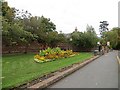
Flowerbed, Station Road
Beside the old A1 through Haddington.
Image: © Richard Webb
Taken: 7 Oct 2013
0.09 miles
9

Former John Knox Institute, Knox Place, Haddington
The Knox Memorial Institute, bearing a life-size statue of the great church reformer who attended the grammar school in Haddington. It was erected in 1878-80 at a cost of £10,000, and is now private flats.
Knox's first step on the road to his historical destiny was taken in 1545, when he acted as bodyguard to the Lutheran preacher George Wishart before the latter's arrest and burning as a heretic.
"There is something symbolic in the first appearance on the page of history of the leading figures of the Reformation. Calvin first appears at his writing-desk, already writing a learned tome at the age of 23. Cranmer is first seen burrowing in the Bible to find scriptural texts to justify his king in divorcing his wife and marrying his mistress. Luther's first appearance was more vigorous, nailing his theses to the door of the church in Wittenberg, striking at the old Church with every blow of the hammer. But Knox is the only one who enters carrying a two-handed sword." -- J Ridley, John Knox, 1968
Image: © kim traynor
Taken: 13 Apr 2011
0.09 miles
10

Knox Court, Haddington
Built as a school - the Knox Institute in 1878 as a tribute to John Knox. Now a private retirement housing development run by Lothian Homes Ltd.
It is Category B listed https://portal.historicenvironment.scot/designation/LB34451.
Image: © Richard Sutcliffe
Taken: 28 Sep 2023
0.11 miles