
IMAGES TAKEN NEAR TO
Meadowbank Road, KIRKNEWTON, EH27 8BS
Introduction
This page details the photographs taken nearby to Meadowbank Road, EH27 8BS by members of the Geograph project.
The Geograph project started in 2005 with the aim of publishing, organising and preserving representative images for every square kilometre of Great Britain, Ireland and the Isle of Man.

There are currently over 7.5m images from over14,400 individuals and you can help contribute to the project by visiting https://www.geograph.org.uk
Image Map
Images are licensed for reuse under creativecommons.org/licenses/by-sa/2.0
Notes
- Clicking on the map will re-center to the selected point.
- The higher the marker number, the further away the image location is from the centre of the postcode.
Image Listing (18 Images Found)
Images are licensed for reuse under creativecommons.org/licenses/by-sa/2.0
Image
Details
Distance
1
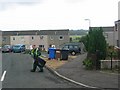
Litterpicking in Kirknewton
Kirknewton has expanded, not surprising considering the communications links. Street cleaning in the east of the village
Image: © Richard Webb
Taken: 4 Aug 2005
0.10 miles
2

The entrance to Kirknewton
The B7030 and NCN75 share this quieter road west from Edinburgh, a more peaceful alternative to the A71 Calder Road.
Image: © M J Richardson
Taken: 18 Nov 2008
0.12 miles
3
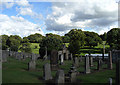
Kirknewton Graveyard
View from Main Street on Sustrans route 75.
Image: © michael ely
Taken: 18 Aug 2010
0.12 miles
4

Kirknewton Graveyard
The site of an old church, but no sign of it now, two burial enclosures, and several 18 Century gravestones
Image: © M J Richardson
Taken: 18 Nov 2008
0.13 miles
5
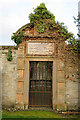
Entrance to Cullen Mausoleum
The mausoleum is on the site of the choir of the old kirk, and commemorates the celebrated physician, botanist and philosopher William Cullen (1710-1790), and his son Robert, Lord Cullen, eminent judge, elegant scholar and accomplished gentleman, who were of the Cullen family of Ormiston. See http://www.cullenproject.ac.uk/william-cullen/
Image: © Anne Burgess
Taken: 2 Nov 2017
0.13 miles
6
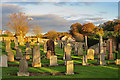
Old Kirkyard
This is the old burial ground, and the site of the original kirk of Kirknewton.
Image: © Anne Burgess
Taken: 2 Nov 2017
0.13 miles
7

Graveyard at Kirknewton
There was a church on this site, but no obvious sign of it now, only two burial enclosures, this one from 1864, of the Cullens
Image: © M J Richardson
Taken: 18 Nov 2008
0.14 miles
8

Burial enclosure of William and Robert Cullen
The inscription above the entrance to the enclosure notes that it was erected in 1864 as a memorial to William by the Royal College of Physicians, Edinburgh, and his great granddaughter Marion Fenella Marjoribanks. He was born in Hamilton, Lanarkshire, in 1710, and died at Kirknewton in 1790. After an ‘apprenticeship’ in Glasgow, service as a ship's surgeon, and a period as assistant to an apothecary in London, he practised medicine from 1732 in various places in Scotland and in 1747 he was appointed to a Lectureship in Chemistry in Glasgow, and in 1751 to the Chair of Medicine. In 1755 he moved to Edinburgh and held the Chair until 1766. He then became Professor of the Institutes of Medicine (Physiology) and of the Practice of Medicine until his resignation in 1789. So he did not have much of a retirement. He was a man of great personal charm, a lively personality, very articulate, and with a rich imagination, so was a good lecturer. His contributions to medicine and his widely used textbooks earned him an international reputation. He was elected a Fellow of the Royal Society of London in 1777 [Information from a biography by W.P.Doyle on the University of Edinburgh’s School of Chemistry website]. Robert, Lord, Cullen, possibly a son [1742-1810], was, according to his plaque, ‘an eminent judge, elegant scholar, and accomplished gentleman’.
Image: © M J Richardson
Taken: 18 Nov 2008
0.14 miles
9

HERE LAYES THE CORPS OF....
....JOHN SMITH SON TO JOHN SMITH WHO DEPARTED THIS LIFE APRILE THE 17 DAY 1735 [or is it 1733?] AGE 10 YEARS. One of several 18 Century gravestones in Kirknewton grave yard. The reverse shows a hammer and horseshoe Image, implying that that was his trade, but would that be the case for a 10 year old?
Image: © M J Richardson
Taken: 18 Nov 2008
0.14 miles
10

Memento Mori
The other side of John Smith's gravestone Image in Kirknewton graveyard.
Image: © M J Richardson
Taken: 18 Nov 2008
0.14 miles