
IMAGES TAKEN NEAR TO
Inverarity Place, MONTROSE, DD10 9HW
Introduction
This page details the photographs taken nearby to Inverarity Place, DD10 9HW by members of the Geograph project.
The Geograph project started in 2005 with the aim of publishing, organising and preserving representative images for every square kilometre of Great Britain, Ireland and the Isle of Man.

There are currently over 7.5m images from over14,400 individuals and you can help contribute to the project by visiting https://www.geograph.org.uk
Image Map
Images are licensed for reuse under creativecommons.org/licenses/by-sa/2.0
Notes
- Clicking on the map will re-center to the selected point.
- The higher the marker number, the further away the image location is from the centre of the postcode.
Image Listing (12 Images Found)
Images are licensed for reuse under creativecommons.org/licenses/by-sa/2.0
Image
Details
Distance
1
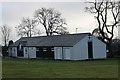
Hillside Scouts
The scout hut at Hillside located on a park near woodland.
Image: © Andrew Wood
Taken: 21 Jan 2017
0.10 miles
2
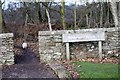
Rosemount Entrance
An entrance to Rosemount estate and woods at Hillside.
Image: © Andrew Wood
Taken: 21 Jan 2017
0.15 miles
3
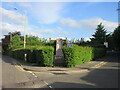
Hillside Parish War Memorial
The William Lamb sculpted war memorial in Hillside, on the apex of Main Road and Rosemount Road.
Image: © Scott Cormie
Taken: 12 Jun 2021
0.15 miles
4
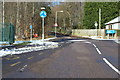
Hospital Road Hillside, Montrose at its junction with the south entrance to Sunnyside Royal Hospital
Image: © Alan Morrison
Taken: 13 Feb 2009
0.17 miles
5
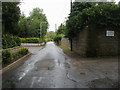
Lamondfauld Road
Lamondfauld Road heading to Dubton Road
Image: © Shaun Ferguson
Taken: 18 Aug 2011
0.19 miles
6

House visited by Robert Burns and Willi Nicol in Hillside, Angus
The photo shows Gayfield House on Hospital Road, in Hillside, where Robert Burns and Willi Nicol visited on the 12th September 1787, while on their journey from Laurencekirk to Montrose. By this stage on their tour, through the Mearns, they had been met by a welcoming party to see them enter into Angus, over the River North Esk, with the party consisting of Burns’s cousin James Burnes of Montrose, Mr Carnegie of nearby Craigo House and Provost Christie, who resided at Gayfield House, previously called Townfield House. Once over the Upper Northwater Bridge, which Mr Carnegie was likely to know well because he lived nearby, the party rode on to Mr Carnegie’s mansion house for a visit. From Craigo House the party proceeded in the direction of Montrose but first stopped off for a visit at Townfield House, the home of Provost Christie. It is likely that it was at that time that Burns watered his horse, as that location is very close to what is now Gayfield House.
Robert Burns kept in close touch with his cousin James Burnes, and during their regular correspondence, it was arranged that Robert would pay James a visit in Montrose while on his return journey to Edinburgh. This suited Burns’s objectives for his tour very nicely, for he had various aims that included collecting old folksongs and music from the Highlands, visiting patrons of the arts who might buy his poetry, seeing more of his native land and changes that were taking place there and satisfying a desire to reconnect with his family roots by visiting such places as Clochnahill Farm near Stonehaven that had been tenanted by his father; Dunnottar Castle, where his grandfather Robert Burnes had been a gardener; and Glenbervie Churchyard, where several of his ancestors were buried, including his great-grandfather James and his great-grandmother Margaret. Burns' connections to his fatherland of the Mearns stretched back to around 1615 with the birth of his great-great-grandfather at Bogjorgan Farm. At this stage in his life, Burns had only lived in his native Ayrshire and in Edinburgh, but he had a desire to reconnect with the family in northeast Scotland and to meet his first cousin James Burnes, who was a schoolmaster in Montrose. In the event, this first meeting of the cousins Robert and James also proved to be their last because it was the only time they met before the untimely passing of Robert at the age of 37.
Image: © Adrian Diack
Taken: 16 Jul 2025
0.21 miles
7

Car park on the Rosemount Estate, Hillside, Angus
The photo shows an east view of the car park on the Rosemount Estate in Hillside, where the new installation of the Robert Burns and Adam Christie memorial was opened on the 22nd March 2024.
Image: © Adrian Diack
Taken: 16 Jul 2025
0.21 miles
8

The New Robert Burns memorial cairn at Hillside by Montrose, Angus
The photo shows the new Burns memorial cairn on the edge of a wooded car park and bordering a meadow on the Rosemount Estate at Hillside near Montrose. When Robert Burns and Willi Nicol left Laurencekirk on the 12th September 1787, they continued their journey toward Montrose for a planned meeting with Burns’s cousin, James Burness. However, before reaching Montrose, Burns stopped on the wayside of the old drove road in Rosemount, Hillside, in order to water his horse. One hundred and forty-three years later, four men saw the worth of creating a memorial to recognise and celebrate that event.
The men behind the creation and siting of the original memorial to Burns’s visit to Hillside and the watering of the horse were Dr C J Shaw, the superintendent of nearby Sunnyside Royal Mental Hospital; Joseph Harris and Willi Herd, orderlies at Sunnyside; and Adam Christie, “The Gentle Shetlander”, who was a long-term patient of 50 years at the hospital and also the member of the group with the artistic talent to fashion the original plaque that was installed in the wall on Rosemount Road in 1930. Because of his artistic leanings and abilities, Christie was encouraged by the professional Montrose sculptor William Lamb, but Christie maintained his independence by declining the offer of sculpting tools, preferring to continue with old nails and a broken piece of glass.
Adam Christie suffered from severe depression, and it, along with other mental illnesses, has undergone a revolution since his death in 1950. Sunnyside was founded in 1781 by the visionary philanthropist Mrs Susan Carnegie, and indeed it was the first mental hospital in Scotland. From its early days, it was not unusual for patients to have lengthy periods of care, even to the point where they became institutionalised. Adam Christie (1868-1950) was such a patient, and during the latter part of his time at Sunnyside, he was known by Rev. William Murray Diack, M.A., of Craig Church, as he was the long-term chaplain there, and also by doctors at that time, including Albert Lewis Hughes, MB ChB, and William Lindsay McDougall, the longstanding deputy.
Over the years the wall on Rosemount Road, where the original memorial was installed, became unsafe, and while the wall was repaired with local stone, the memorial was removed on the 6th April 2023. This work and the creation of the new memorial were done under the auspices of the Montrose Burns Club, who raised the funds and made the arrangements for the building of the new memorial cairn in the nearby grounds of the Rosemount Estate. The concrete base for the new cairn was laid in April 2023, with continuing work carrying on into the spring and summer. The new monument was built from stone that became available from the closure of Sunnyside Hospital in 2011, and it gives a tangible link to the “four good men of Hillside” who instigated the original monument. The horseshoe shape of the new monument took inspiration from the act of watering Burns’s horse, and the sculpted head at the centrepiece was created from a piece of Shetland stone by Brian Wyllie of Pitmures in the style of Adam Christie.
The opening ceremony of the new cairn was attended by a crowd of more than 50 people, including Lord Lieutenant Patricia Sawers, Provost Brian Boyd and Neil McNair, the president of the Robert Burns World Foundation. In addition to those dignitaries, Adam Christie’s great-nephew Peter Christie and his wife, Pat, travelled from Shetland to be present at the occasion.
Montrose Royal Mental Hospital, also known as Sunnyside Royal Hospital, closed in 2011, and after the buildings were demolished and the site cleared, a new development took shape. With a nod to the past, new road names came into being that included Susan Carnegie Boulevard, Robert Burns Drive and Adam Christie Avenue.
Image: © Adrian Diack
Taken: 16 Jul 2025
0.21 miles
9

West view of the car park off Rosemount Road, Rosemount Estate, Hillside, Angus
Looking beyond the sign for the Rosemount Estate, the view in the photograph shows a partial view of the car park in a woodland clearing where the construction of the Burns/Christie memorial was begun toward the end of March 2023 and was completed in early September 2023.
Image: © Adrian Diack
Taken: 16 Jul 2025
0.22 miles
10

Path through the “Fairy Wood” on the Rosemount Estate, Hillside, Angus
The Rosemount estate would have a high rating on a landscape evaluation index, as it has a varied landscape with a large amount of mature deciduous trees, open meadows, a pond and a central clearing where Rosemount House was situated. The photo shows the start of a circular woodland walk through the Fairy Wood that leads from the car park off Rosemount Road, where the new Burns cairn is situated. The Fairy Walk, with its many charming carved wooden signs, is particularly appealing and full of interest to young children with a liking for fairies, pixies, goblins and other such creatures.
Image: © Adrian Diack
Taken: 16 Jul 2025
0.23 miles