
IMAGES TAKEN NEAR TO
Warwick Bridge, CARLISLE, CA4 8RD
Introduction
This page details the photographs taken nearby to CA4 8RD by members of the Geograph project.
The Geograph project started in 2005 with the aim of publishing, organising and preserving representative images for every square kilometre of Great Britain, Ireland and the Isle of Man.

There are currently over 7.5m images from over14,400 individuals and you can help contribute to the project by visiting https://www.geograph.org.uk
Image Map
Images are licensed for reuse under creativecommons.org/licenses/by-sa/2.0
Notes
- Clicking on the map will re-center to the selected point.
- The higher the marker number, the further away the image location is from the centre of the postcode.
Image Listing (45 Images Found)
Images are licensed for reuse under creativecommons.org/licenses/by-sa/2.0
Image
Details
Distance
1
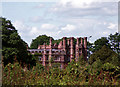
Holme Eden Abbey, Warwick
Not really, just the extravagant roofline of Neo-Tudor chimneys and turrets. The house is built of attractive red sandstone. All the work of prolific architect John Dobson (with the help of local man James Stewart), 1833-37, for local cotton manufacturer Peter Dixon. Grade II* listed.
Dobson (1787-1865) developed a very large practice, almost exclusively in the north of England from his base in Newcastle. In his Biographical Dictionary of British Architects, Howard Colvin states that Dobson "designed or altered over sixty churches or chapels and more than a hundred country houses". Having returned north after a brief foray to London, he wrote that "with the exception of Mr Bonomi of Durham [he was] the only professional architect between Edinburgh and York".
Image: © Stephen Richards
Taken: 11 Jun 2005
0.01 miles
2
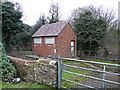
Warwick Bridge Wastewater Pumping Station
On Little Corby Road.
Image: © Rose and Trev Clough
Taken: 25 Feb 2016
0.14 miles
4
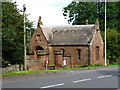
Holme Eden Lodge
Beside the A69, close to the eastern end of Warwick Bridge.
Image: © David Rogers
Taken: 9 Sep 2009
0.15 miles
5
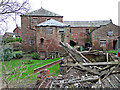
Warwick Bridge Corn Mill
A water mill built in 1839 for the Howard family of Corby Castle. It was in use grinding oats for animal feed until 1989, and much of the machinery, including the water wheel, is still intact.
The buildings had been deteriorating for some years, but a restoration scheme is now in place. The North of England Civic Trust acquired the mill in 2015, and hope to have it working again within a few years http://www.nect.org.uk/warwick-bridge-corn-mill .
The site was flooded in December 2015, but the wreckage in the foreground of this photo is not as disastrous as it might look. It was the floor of a shed which had already been demolished, and was due be removed as part of the renovation work.
Image: © Rose and Trev Clough
Taken: 25 Feb 2016
0.16 miles
6
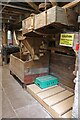
Warwick Bridge Mill - jog scry
This disused oscillating sieve or jog scry was part of the oat milling process but oats are now milled here by a different process. All the kit was retained during restoration but only two sets of French burr stones can be used. The mill was busy making flour and it was a real treat to visit and see it working. It is not open usually but it may be possible to arrange a visit on request. One of the highlights of my week.
Image: © Chris Allen
Taken: 28 Sep 2023
0.16 miles
7
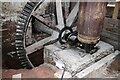
Warwick Bridge Mill - pit wheel and vertical main shaft
The wallower and great spur wheel are higher up the wooden main shaft out of shot. The footstep bearing is instrumented for temperature and vibration although the miller is not convinced of their efficacy. She says the smell of hot grease is a good indication of things getting too hot. The half bearing on the wheelshaft is the usual culprit.
Image: © Chris Allen
Taken: 28 Sep 2023
0.16 miles
8
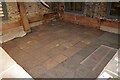
Warwick Bridge Mill - drying kiln
Like many north of England mills, this has a drying kiln to prepare grain for milling by reducing its moisture content. This shows the perforated tile floor that the grain was spread on. This is no longer in use.
Image: © Chris Allen
Taken: 28 Sep 2023
0.16 miles
9
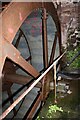
Warwick Bridge Mill - the wheel
The high breast shot waterwheel that powers this working water mill. The miller opened the gate to allow this view after the wheel had stopped.
Image: © Chris Allen
Taken: 28 Sep 2023
0.16 miles
10
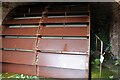
Warwick Bridge Mill - the wheel
The restored high breast shot waterwheel at this working flour mill. Milling had finished for the day and the miller very kindly opened the gates to allow this unobstructed view. This wide wheel could drive up five sets of stones.
Image: © Chris Allen
Taken: 28 Sep 2023
0.16 miles