
IMAGES TAKEN NEAR TO
Brokerswood, WESTBURY, BA13 4EJ
Introduction
This page details the photographs taken nearby to BA13 4EJ by members of the Geograph project.
The Geograph project started in 2005 with the aim of publishing, organising and preserving representative images for every square kilometre of Great Britain, Ireland and the Isle of Man.

There are currently over 7.5m images from over14,400 individuals and you can help contribute to the project by visiting https://www.geograph.org.uk
Image Map
Images are licensed for reuse under creativecommons.org/licenses/by-sa/2.0
Notes
- Clicking on the map will re-center to the selected point.
- The higher the marker number, the further away the image location is from the centre of the postcode.
Image Listing (8 Images Found)
Images are licensed for reuse under creativecommons.org/licenses/by-sa/2.0
Image
Details
Distance
1
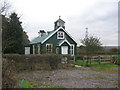
Tin Tabernacle, Brokerswood
All Saints church at Brokerswood is one of the few remaining prefabricated churches, known as tin tabernacles, still in use.
Image: © Phil Williams
Taken: 27 Nov 2005
0.13 miles
2
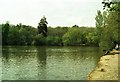
Lake at Brokerswood Country Park
The 1940s map names this wood as High Wood and shows no lake. The area is now the private Brokerswood Country Park. Besides the lake there are pleasant walks through the woods with carpets of bluebells and children's climbing frames etc., a narrow gauge railway and camping area.
Image: © Alan Cooper
Taken: 2 May 2005
0.15 miles
3
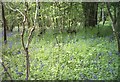
Wood at Brokerswood Country Park
This old woodland is being replenished with trees in memory of loved ones.
Image: © Alan Cooper
Taken: 2 May 2005
0.15 miles
4
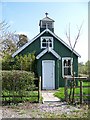
All Saints Church, Brokerswood
This small timber framed church is clad with corrugated iron, and is known locally as the “Tin Tabby”.
Image: © Maigheach-gheal
Taken: 19 Apr 2009
0.16 miles
5
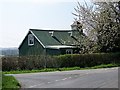
All Saints Church, Brokerswood
This tin mission church was originally erected at Southwick to replace the iron church there that had been destroyed in a fire in 1897. A new stone church was built in Southwick in 1905 the tin church was taken down loaded on to a steam driven lorry and then reassembled at Brokerswood on land given by a Mr Asher of Wimborne. The main structure is of wood with galvanised corrugated iron cladding. There are no mains water, gas or electricity and heating is by portable gas heaters and lighting by oil lamps. The church was restored in the 1990s and is still used for services.
Image: © Maigheach-gheal
Taken: 19 Apr 2009
0.17 miles
6
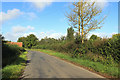
Brokerswood
Country lane through Brokerswood.
Image: © Wayland Smith
Taken: 20 Aug 2020
0.17 miles
7
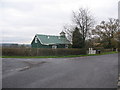
All Saints church, Brokerswood
This small church is positioned at a cross roads at Brokerswood.
Image: © Phil Williams
Taken: 27 Nov 2005
0.19 miles
8
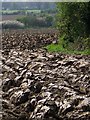
Plough, Brokerswood
The field had just been ploughed and the smell of fresh earth was overwhelming.
The earliest form of cultivation consisted simply of scratching the soil with a branch or antler to enable a seed to be buried. Early ploughs did no more than this. Later models were designed to bury the remains of the previous crop and surface debris.
The Romans designed a plough with stout iron teeth mounted on a wooden sole which turned the soil. Celts and Romans, using light ploughs, adopted the practice of cross-ploughing, so that their fields tended to be almost square. The Saxons, using a heavy, eight-oxen plough, made their fields long to reduce the number of turns. The old English furlong, one-eighth of a mile, is derived from ‘furrow long’.
The earliest mould-board plough, similar to that used today, dates from Saxon times. But the really modern mould-board dates from the 18th century with the introduction of iron. Double-furrow ploughs, pulled by two horses, were common until tractors were introduced. Today, powerful tractors pull banks of ploughs which cut many furrows at the same time.
Image: © Maigheach-gheal
Taken: 19 Apr 2009
0.19 miles