
Shinfield Park ("Goodrest") and its history
Introduction
The photograph on this page of Shinfield Park ("Goodrest") and its history by D Gore as part of the Geograph project.
The Geograph project started in 2005 with the aim of publishing, organising and preserving representative images for every square kilometre of Great Britain, Ireland and the Isle of Man.

There are currently over 7.5m images from over 14,400 individuals and you can help contribute to the project by visiting https://www.geograph.org.uk
Shinfield Park ("Goodrest") and its history
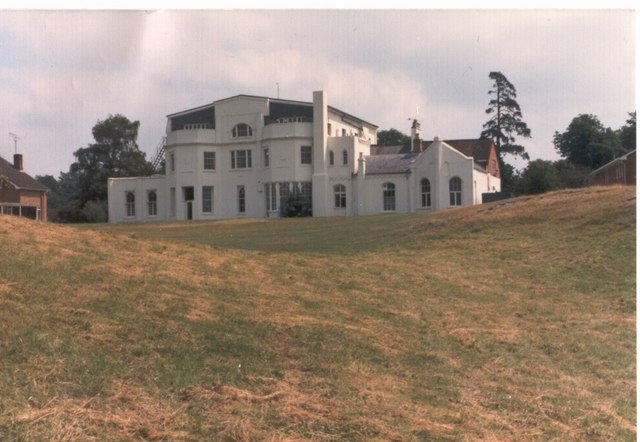
Image: © D Gore Taken: Unknown
The building is a converted 17th century ornamental Gothic mansion built in 1630 by Sir Francis Englefield and known as “Goodrest”, so named (it is said) because, during the Civil War, it was where an exhausted Cromwell stayed in 1643 after the battle of Newbury. The estate is also known by its original name, Shinfield Park, and in the map of 1882, such was the size of the gardens and orchards to the south of the mansion that some twenty gardeners were needed to look after them. A retired judge of the Indian Civil Service, John Dawson Mayne (1828-1917) from an Irish family, lived here with his second wife Annie Katherine from 1877 until his death. He was famous for having written the first Indian Penal Code (later expanded by Coutts-Trotter). After his death the north-west half of the grounds were sold off for housing which necessitated the filling in of a lake. The remainder of the estate is now a school (Crosfields School http://www.crosfields.com/ , part of the Leighton Park Trust) enveloped by the expansion of Reading.
Images are licensed for reuse under creativecommons.org/licenses/by-sa/2.0
Image Location

Latitude
51.422494
Longitude
-0.94863