
Prince Rupert's Tower, Everton FC's Symbol
Introduction
The photograph on this page of Prince Rupert's Tower, Everton FC's Symbol by Sue Adair as part of the Geograph project.
The Geograph project started in 2005 with the aim of publishing, organising and preserving representative images for every square kilometre of Great Britain, Ireland and the Isle of Man.

There are currently over 7.5m images from over 14,400 individuals and you can help contribute to the project by visiting https://www.geograph.org.uk
Prince Rupert's Tower, Everton FC's Symbol
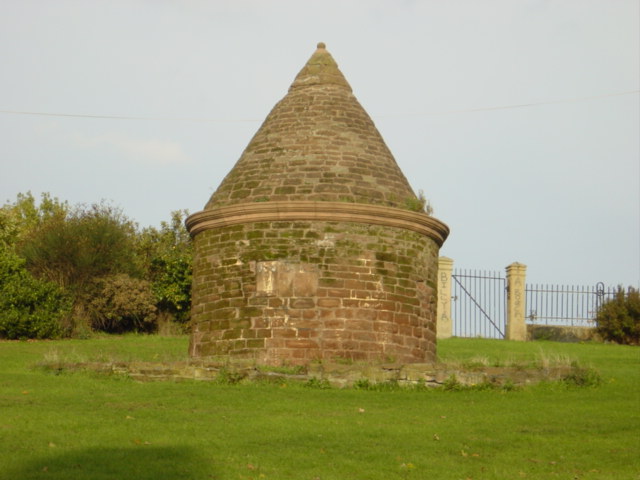
Image: © Sue Adair Taken: 31 Oct 2005
This is the famous Everton roundhouse featured on the EFC badge, sometimes known as Prince Rupert's Tower. At the end of the 1937/38 season, club secretary Theo Kelly, who later became The Toffees first post-war manager, wanted to design a club necktie and although it was agreed that the colour should be blue, Kelly was given the task of designing a crest to be featured on the tie. Kelly considered the matter for four months until deciding on a reproduction of the tower which stands in the heart of the Everton district. The roundhouse has been inextricably linked with the Everton area since its construction in 1787, originally used as a bridewell to incarcerate criminals, it still stands today on Everton Brow in Netherfield Road. The roundhouse was accompanied by two laurel wreaths on either side and, according to the College of Heraldry and Arms in London, chosen as they were the signs of winners in classical times. The crest was accompanied by the club motto, "Nil Satis, Nisi Optimum", which means "Only the best is good enough". The ties were first worn by Kelly and the Everton chairman, Mr. E. Green on the first day of the 1938/39 season.
Images are licensed for reuse under creativecommons.org/licenses/by-sa/2.0
Image Location

Latitude
53.416901
Longitude
-2.969671