
Early cast iron bridge, Innocent Railway
Introduction
The photograph on this page of Early cast iron bridge, Innocent Railway by Jim Barton as part of the Geograph project.
The Geograph project started in 2005 with the aim of publishing, organising and preserving representative images for every square kilometre of Great Britain, Ireland and the Isle of Man.

There are currently over 7.5m images from over 14,400 individuals and you can help contribute to the project by visiting https://www.geograph.org.uk
Early cast iron bridge, Innocent Railway
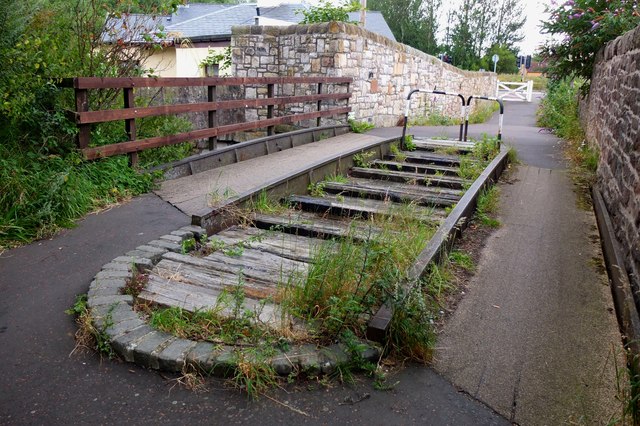
Image: © Jim Barton Taken: 14 Aug 2012
The Edinburgh & Dalkeith Railway, designed by engineer James Jardine, was opened in 1831 as a horse-drawn railway to transport coal into Edinburgh, nicknamed ‘Auld Reekie’ from the coal smoke. The railway’s name came from its initial use of horses rather the modern and potentially dangerous steam locomotives. From 1832 the railway began to carry passengers as well. It was taken over by the North British Railway in 1845, later by LNER and finally by British Railways, and closed in 1968. This cast iron bridge over the Braid Burn (1831) is an early example of its type, and was built by the Shotts Iron Co. for £133 10s. (From the nearby information board). The line and tunnel to St Leonard’s are now a cycleway and footpath.
Images are licensed for reuse under creativecommons.org/licenses/by-sa/2.0
Image Location

Latitude
55.936453
Longitude
-3.144357