
Tutsan (Hypericum androsaemum)
Introduction
The photograph on this page of Tutsan (Hypericum androsaemum) by Evelyn Simak as part of the Geograph project.
The Geograph project started in 2005 with the aim of publishing, organising and preserving representative images for every square kilometre of Great Britain, Ireland and the Isle of Man.

There are currently over 7.5m images from over 14,400 individuals and you can help contribute to the project by visiting https://www.geograph.org.uk
Tutsan (Hypericum androsaemum)
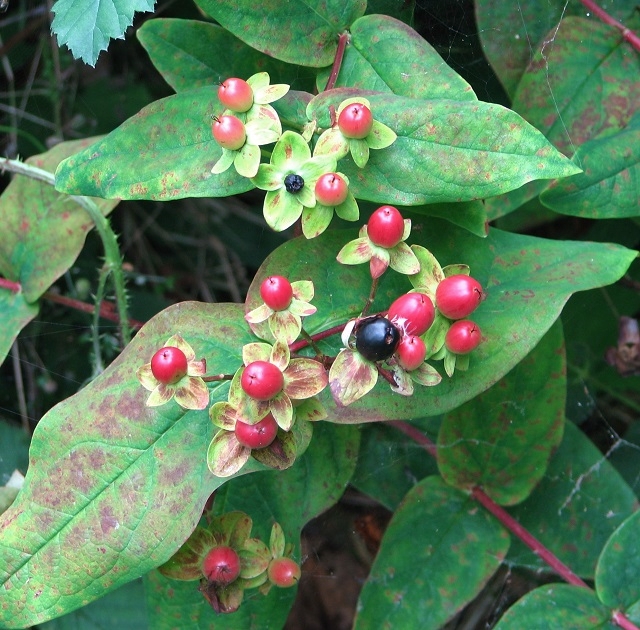
Image: © Evelyn Simak Taken: 6 Aug 2017
This plant is a relative of St John's wort and native to western and southern Europe and Iran. It can commonly be found growing in damp or shaded habitats including deciduous woodland and hedgerows. When the leaves are crushed, they smell slightly aromatic. The common name of the plant is derived from "Toutesaine" which means "all healthy" and indeed it was an important medicinal plant in the Middle Ages when it was used for treating a number of diseases including cholera. The Physicians of Myddfai wrote that “The mugwort, madder, meadow sweet, milfoil, hemp, red cabbage, and the tutsan, all these seven herbs enter into the composition of the medicine required. Whosoever obtains them all, will not languish long from a wounded lung, or need fear for his life.” The 19th century herbalist Culpeper recommended it for treating sciatica, gout and for healing burnings by fire.
Images are licensed for reuse under creativecommons.org/licenses/by-sa/2.0
Image Location

Latitude
52.604557
Longitude
1.393308